

Experiences
Freediving in the Sea of Cortez: the most intimate (and most respectful) way to meet the megafauna
August 25, 2026
There's a moment, just after you let the air go and before you start to descend, when the body stops fighting the water and begins to belong to it. The tank stays at the surface. So does the noise. All that comes down with you is a single breath, held the way you'd hold a secret, and the certainty that you have exactly as much time as your calm allows. In that silence, when a large animal decides to come closer, it doesn't arrive fleeing or challenging: it arrives curious. Freediving doesn't chase the megafauna of the Gulf of California. It waits for it.
At Akampa we've seen that difference many times, and it's hard to explain until you've lived it. Scuba is entering the sea as visitors with luggage: bubbles, a breathing engine, a cloud of sound ahead of every movement. Freediving is entering with empty hands. That's why we wanted to write this: not as an extreme sport, but as the most honest way to meet, face to face, one of the most alive marine ecosystems on the planet.
What is freediving, and why does it change the encounter?
Freediving, or breath-hold diving, is the practice of going under on a single held breath, with no self-contained air supply. Its tool isn't technology, it's physiology: the human body's ability to adapt to water through what's known as the mammalian dive reflex, which slows the heart rate and redistributes blood to protect the vital organs when the face meets cold water.
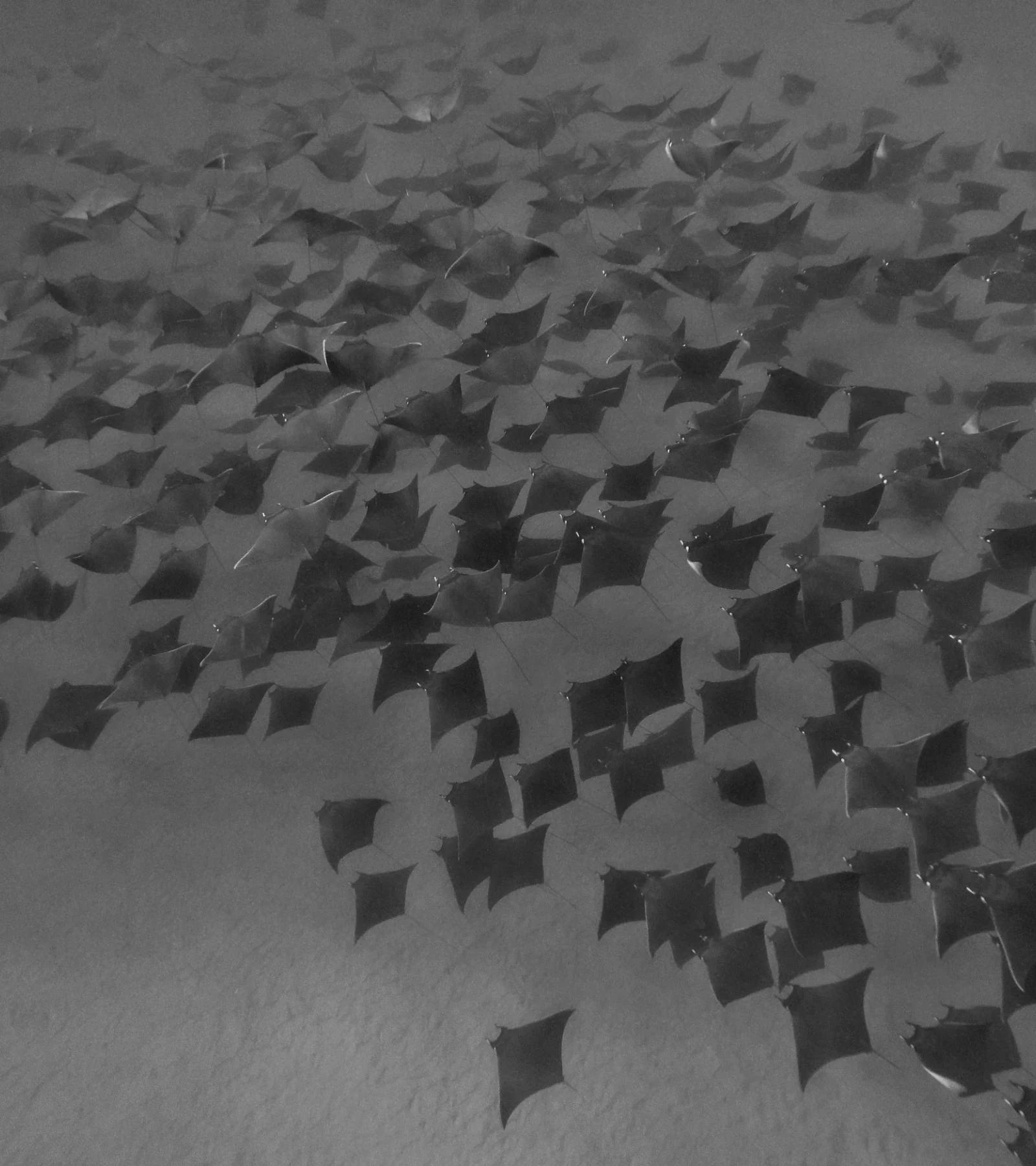
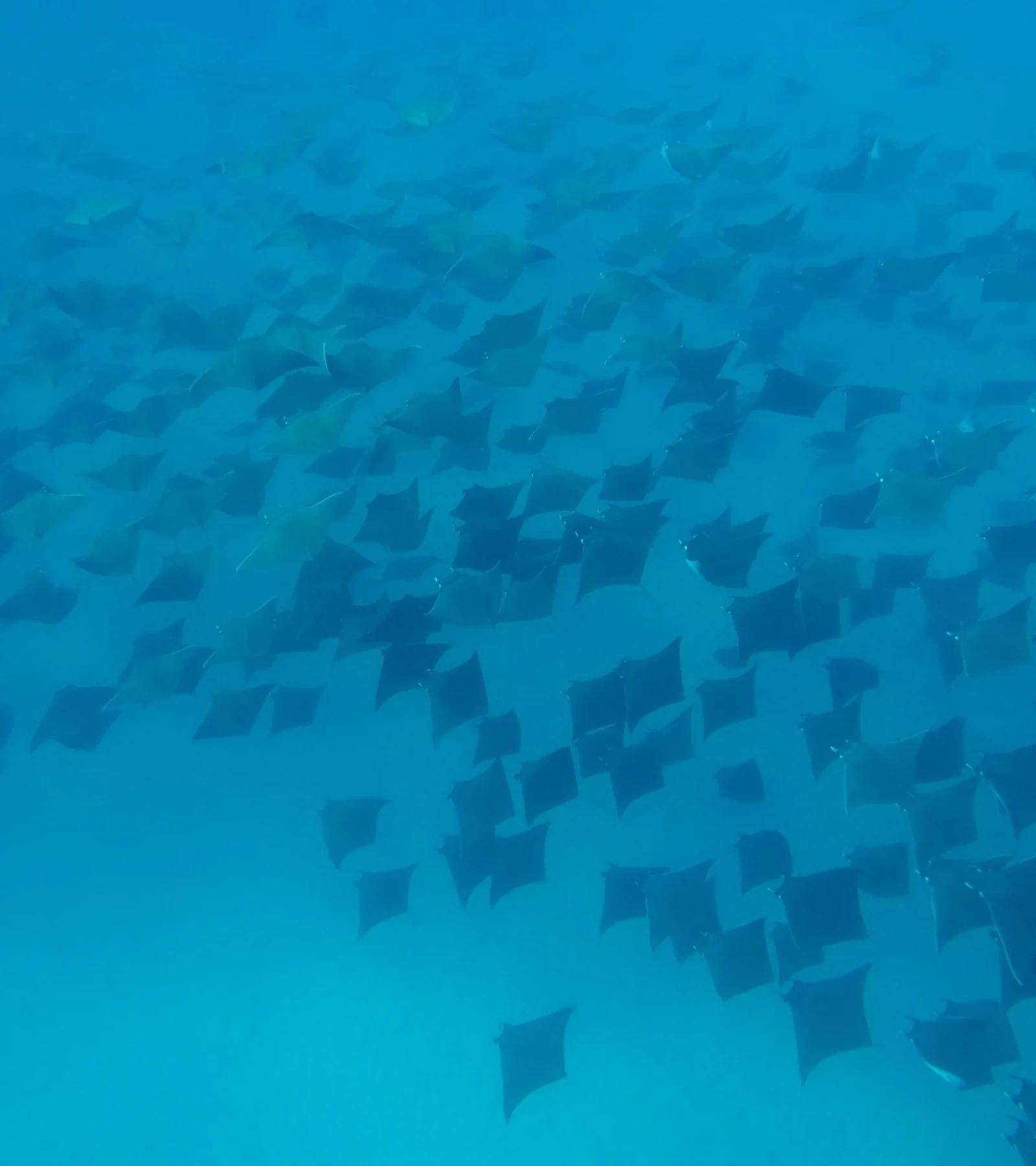
What that means below the surface is simple and enormous at the same time. No tank means no bubbles, and no bubbles means none of that curtain of sound animals read as an intrusion. The freediver moves slowly, spends little, pauses often. To a young sea lion, to a school of mobula rays passing through, that silent body isn't a threat: at most, it's one more curiosity in their territory. The encounter stops being a chase and becomes a conversation in which the animal has the last word.
You don't have to be an athlete to start. Recreational surface freediving, done with a guide and with judgment, is within reach of any traveler in reasonable shape. What it does demand, always, is respect: for the sea, for the animals and for your own limits.
Why the Sea of Cortez is the place
The nickname "the world's aquarium" stuck to the Sea of Cortez, and where the place is cared for it still holds. This arm of sea between the Baja California peninsula and the mainland concentrates extraordinary marine biodiversity: close to 900 species of fish and, according to UNESCO, around a third of all the marine mammal species on the planet, converging where the desert leans over the water.
For freediving, that abundance turns into something concrete. Depending on the season, the waters around La Ventana and Isla Cerralvo offer enough visibility and enough life that an encounter stops being a matter of luck and becomes part of the landscape. Here, one breath well spent can be enough to drop a few meters, hold still and let the blue do the rest.
> Akampa tip: the mobula ray window in La Ventana runs from May to July, and it's one of the most photogenic times to get close to the megafauna. If you're coming in that season, plan around it. More context in the Móbulas & Megafauna Safari.
The megafauna you might meet
What makes the Sea of Cortez what it is: it guarantees nothing, and precisely because of that, when it gives you an encounter, it gives it for real. These are some of the presences the area makes possible, always subject to season, conditions and the chance no brochure should ever promise:
- Mobula rays. Between May and July, schools of mobula rays turn the surface into a silent choreography of wings. Watching them pass a few meters away, with no bubbles in between, is one of the most intact experiences the gulf gives.
- Sea lions. The colonies in the area make for encounters, snorkeling and on surface freedives, with young sea lions, curious and playful, who tend to come over on their own initiative.
- Whatever the season brings. The gulf is a corridor for large marine animals all year, but what shows up and when changes from season to season. Ask local guides before you travel instead of trusting a list: whoever is in the water every day is the only one who knows what's happening this week.
The rule that holds all of the above together: in the water, the animal is in charge. You don't chase it, you don't touch it, you don't cut across its path. You watch.
Why freediving is the most respectful way
There's a comfortable idea in nature travel: the more gear and the more access, the better the experience. Freediving proposes the opposite, and that's why it interests us so much. It's a practice of subtraction, not accumulation. Take away the tank, take away the noise, take away the hurry, and what's left is an encounter with a smaller footprint.
The argument isn't only poetic, it's ecological. The bubbles and sound of scuba alter the behavior of many species; the freediver, silent and briefly there, interferes less. Then there's the obvious: with no engines running above every dive, no heavy gear, human presence weighs less on the ecosystem. Freediving done well is, almost by definition, low-impact tourism.
But the gear is only half of it. The other half is conduct. Approaching megafauna on a breath demands rules that aren't suggestions: keep your distance, don't touch or feed, don't block the animals' movement, get in the water in small groups and let the animals decide how close things get. Doing it with operators who know the terrain isn't a luxury: it's the difference between an encounter that renews the will to conserve and one that stresses an animal for a photo.
How to prepare (and why the how matters)
Recreational freediving is accessible, but it can't be improvised. Three principles are enough to start well:
- Never alone. The golden rule of freediving is to always dive with someone, with a partner watching from the surface. Most freediving incidents are avoidable, and they happen when this gets ignored.
- Breathe, don't force. The goal isn't to last longer, it's to be calmer. The relaxation work beforehand matters more than the size of your lungs.
- Train before you go down. Freediving is learned with a certified instructor, in a course, not by reading an article. A good instructor doesn't push you deeper: they teach you to read your limits.
Preparation isn't only personal safety. It's respect: a freediver who gets in the water nervous, with no control of buoyancy or movement, disturbs the animals without meaning to. The calm you train on land is also a way of looking after the sea.
A note on conservation
In El Sargento, La Ventana's sister town, there's a family that understood before most that the sea was worth more alive than empty. Nativo Expediciones grew out of fishermen who for years took from the Gulf of California whatever the gulf gave, and who today run ecotourism in those same waters. The change wasn't a stance: it was an economic and a life decision. They found that taking a traveler out to meet the mobula rays earns an income that fishing those same mobula rays would never give, and that this income depends, month after month, on the animals still being there.
That, for us, is the proof that conservation can pay for itself. When looking after marine life pays better than extracting it, the incentive switches sides. It's the same logic behind Cabo Pulmo, where a town stopped fishing and the reef multiplied its biomass more than fivefold in a decade.
Our experience in the Sea of Cortez
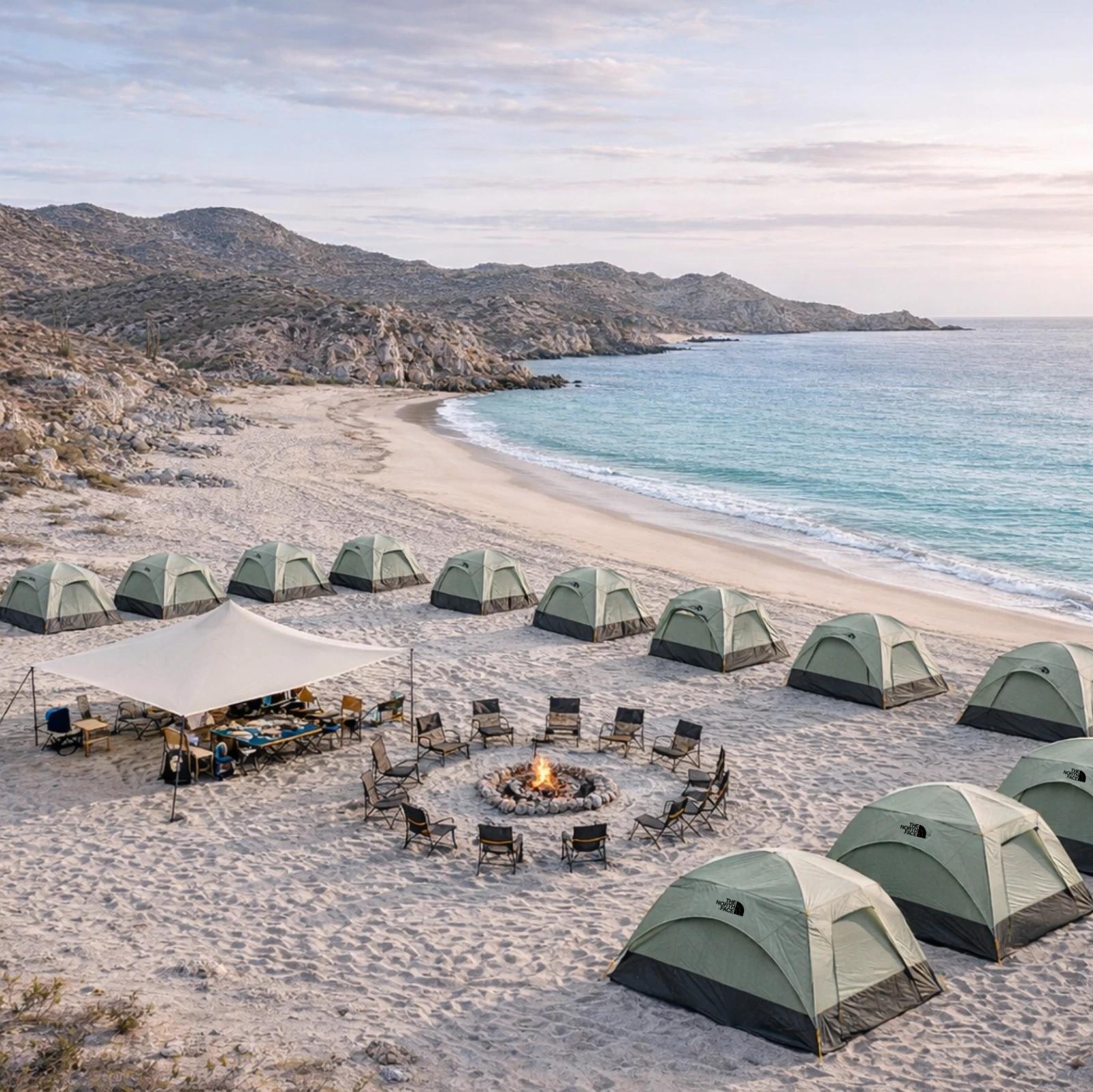
At Akampa we design our La Ventana expeditions around that idea: that the most intimate way to get to know an ecosystem is also the one that hurts it least. Sleeping in front of the Sea of Cortez, heading out with guides who know every school and every season, and approaching the megafauna without hurry isn't a sports program. It's a way of traveling that leaves the place better than we found it.
Let's be clear about what we offer: our time in the water is snorkeling and surface, guided and in small groups. We don't teach freediving courses. If you want to train, do it with a certified school; what you will find with us is the place, the season and the way of being in the water that makes the encounter possible.
If you want to be here when the gulf is at its most alive, the starting point is our Móbulas & Megafauna Safari in La Ventana. And if you're still planning, these pieces will help you put the trip together: what to do in La Ventana, where to see mobula rays and orcas in Mexico and, to understand why we do things this way, conservation tourism in Mexico.
Take a look at the calendar of upcoming departures and let's put your La Ventana expedition together.
See you out there.