
Regenerative Tourism
The world's aquarium: how the Sea of Cortez earned the name, and why it still deserves it
August 18, 2026
Some seas you look at and some you feel. The Sea of Cortez belongs to the second kind. Anyone who has spent a night on one of its islands knows the water here isn't background scenery: it's a presence that breathes, that changes color with the hour, that suddenly boils when a school of mobula rays breaks the surface or a pod of sea lions decides to follow the panga. It's no accident that this corner of northwest Mexico is where one of the most repeated phrases in marine writing stuck: the world's aquarium. It's usually credited to Jacques Cousteau, though no documented record exists of when or where he said it. Wherever it came from, two things are worth asking together, which almost never happens: how it earned the name, and whether it still deserves it. We operate inside this sea for a good part of the year, so the question isn't rhetorical. It's the one that orders how we work. ## The phrase that named a sea The Sea of Cortez, also called the Gulf of California, is the strip of water that separates the Baja California peninsula from the rest of Mexico. It's a young sea in geological terms, narrow and deep, fed by cold upwellings that lift nutrients off the bottom and set off a chain of life that is hard to find at this scale in so little surface area. That concentration is what astonishes: not the rarity of one isolated species, but the density of the whole. A small sea that behaves like an enormous one. The phrase stuck because it was accurate. And it stuck because it carries an uncomfortable promise: an aquarium is a place somebody looks after. Calling the Gulf of California that was, without meaning to, setting a standard. It's worth being precise: the attribution to Cousteau is repeated everywhere, SEMARNAT included, but nobody has documented the original source, and UNESCO, which records the nickname on the site's official listing, avoids crediting anyone.

What fits in this sea
The numbers explain the nickname better than any adjective. In 2005 UNESCO inscribed the site "Islands and Protected Areas of the Gulf of California" as World Heritage: 244 islands and islets grouped into eight clusters, plus another nine protected coastal and marine areas, over a total of 1,837,194 hectares. Within that perimeter around 900 fish species have been documented, some 90 of them found nowhere but the Gulf of California or one of its stretches.
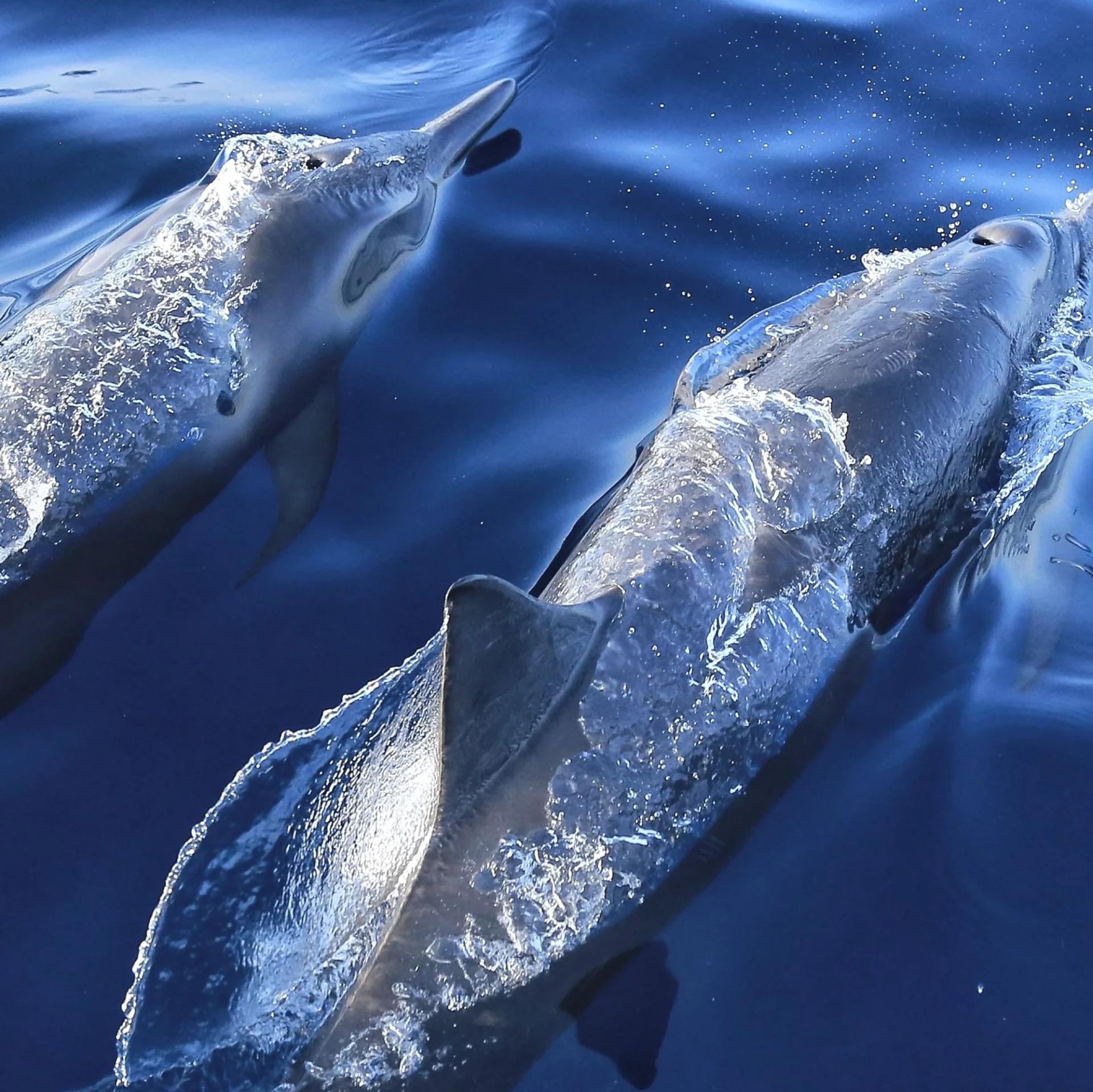
The figure that's genuinely hard to take in is another one. According to UNESCO, this site provides habitat for close to a third of all the marine mammal species on the planet. Put another way: one in every three species of whale, dolphin, porpoise and sea lion in existence can be found, at some point, in this sea. It's why a single trip can run into mobula rays leaping in aggregations of thousands, curious sea lions, orcas passing through and, in its Pacific bays, the gray whale that arrives each winter to calve.
It isn't a pretty sea. It's an improbable one.
What exists only here
Endemism is the Gulf's fingerprint. Two species tell what's at stake better than any others.
The totoaba, a large fish that exists nowhere outside this sea, is classified as endangered under the Mexican standard NOM-059 and appears in Appendix I of CITES, which bans its international trade outright.
And the vaquita, the smallest cetacean in the world, which lives only in the shallow waters of the Upper Gulf. In the September 2025 survey, researchers estimated with 67% probability that between seven and ten distinct individuals were sighted in the study area, and confirmed at least one or two calves. That detail matters more than the count: it means the species is still breeding.
But the contrast is brutal. The first full census, in 1997, estimated 567 vaquitas; by 2008 there were 245 and by 2015, 59. The main cause of the collapse is known and avoidable: illegal gillnets, set mostly to catch totoaba, in which the vaquita is caught as collateral damage. In 2019 UNESCO added the site to the List of World Heritage in Danger, where it remains after the Committee's review in July 2025. The world's aquarium officially entered intensive care.
What's at stake
It's tempting to read this as a note of mourning, and it isn't one. The vaquita is the most visible symptom of a tension that runs through the whole Gulf: an extraordinarily rich sea, pressed by unsustainable fishing, by wildlife trafficking and by an economic model that treats nature as free inventory. The nickname works today as a question aimed at those of us who make a living from this sea. If it's the world's aquarium, who looks after it, and with whose money?
That's where the conversation stops being ecological and becomes economic too. Because the best evidence that the Gulf can recover isn't in a laboratory. It's a few hours' drive away, in a small bay on the East Cape.

Cabo Pulmo: proof that a sea can come back
In 1995 the families of Cabo Pulmo, in Baja California Sur, made a decision that at the time looked like the opposite of logic: stop fishing the reef they depended on and turn it into a no-take zone. The reef was exhausted. The bet was to let it rest and to live from showing it, not from emptying it.
What happened next became a case studied around the world. A team of researchers documented that, between 1999 and 2009, total fish biomass inside Cabo Pulmo National Park grew by 463%: from 0.75 to 4.24 tonnes per hectare. The biomass of large predators, the sharks and groupers that are usually the first to disappear, multiplied elevenfold. In neighboring areas without effective protection, over the same period, biomass didn't change significantly. The difference wasn't luck. It was the decision, held by the community, not to touch.
Cabo Pulmo proves something conservation rhetoric rarely manages to show in numbers: that a marine ecosystem can come back, and fast, when extraction stops and a different economic value takes its place. The reef didn't return in spite of the community. It returned because of it.
Conserving faster than we extract
This is the idea that holds us up, and the reason we don't describe ourselves as a travel agency. Akampa isn't a tourism company that does conservation; it's a conservation company that sustains itself through tourism. The distinction isn't marketing. It's incentives. As long as caring for a reef, a bay or a mobula season generates more value than exploiting it, there will be a real reason, not only a moral one, to protect it. The goal isn't to not intervene: it's to conserve faster than we extract.
That mechanism has a face. A few minutes from La Ventana, in the village of El Sargento, a family who lived for generations from small-scale fishing today runs ecotourism expeditions in the Sea of Cortez: Nativo Expediciones. They know the water because they worked it another way. Today the same knowledge that once found fish finds mobula rays without disturbing them, reads the wind, and knows when not to go out. When someone travels with us and with them, their money doesn't compete with conservation: it funds it. It's the same logic as Cabo Pulmo, alive, happening again.
That's why we argue that ecotourism done well isn't a gentler version of the tourism of always. It's a conservation tool with financial statements. We wrote it out in more detail in our piece on conservation tourism in Mexico, and we put our own numbers on it on our Impact page.
Our expedition in the Sea of Cortez
The world's aquarium still deserves the name, but no longer as a guaranteed fact: as a shared responsibility. Some seas are lost quietly and some come back because someone decided they were worth more alive. The Gulf of California can still be the second kind.
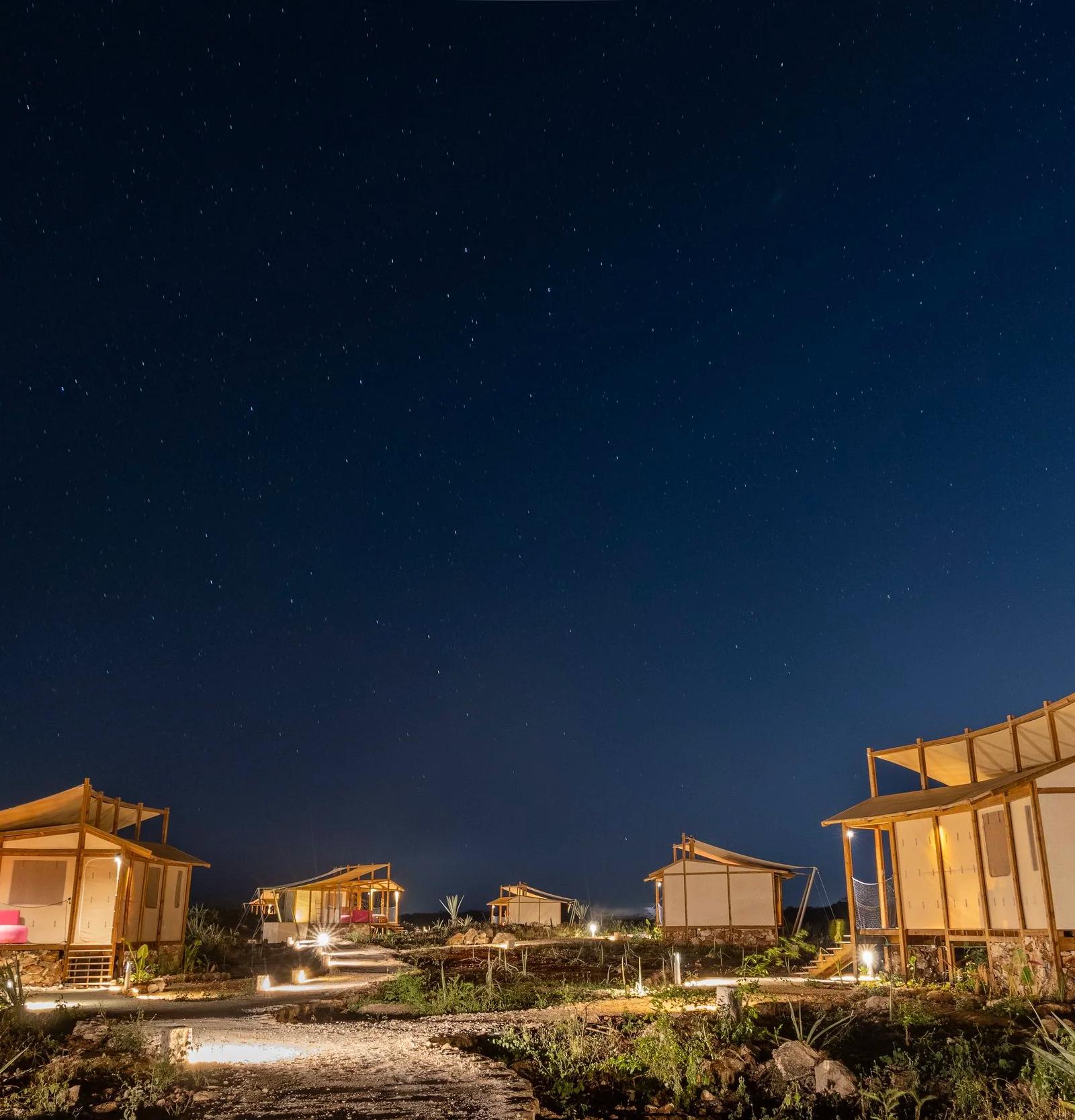
We travel it from La Ventana, where each season we swim among aggregations of mobula rays and megafauna that remind you, with no need for a speech, why that name stuck to this sea. If you want to see it up close, that's the expedition we open this sea with.
Take a look at the Móbulas & Megafauna Safari in La Ventana, or check the calendar of upcoming departures.
Someone gave it a name. Ours is the harder and the better part: keeping the name true.
See you out there.