
Regenerative Tourism
Field log: what we saw this season in Magdalena Bay (and what we learned)
September 22, 2026
Every season in Magdalena Bay begins and ends with the same gesture: pushing the panga off before dawn and reading, all over again, a bay that is never quite the one we left. This log is our way of honoring that gesture. It isn't an operations report or a list of sightings: it's what ended up in the margins of the notebook when we closed camp and counted, one more time, what the bay taught us.
We write it from the conviction that orders everything we do: we aren't a tourism company that does conservation, we're a conservation project that tourism keeps afloat. And a season, seen up close, is the best test of whether that model works. Here's what we saw, what surprised us, and what we're carrying into the next one.
The bay isn't a backdrop, it's a living system
Magdalena Bay is not a fixed postcard. It's a complex of mangroves, channels and two barrier islands, Isla Magdalena and Isla Santa Margarita, that separate the inner lagoon from the open Pacific. That threshold, between still water and ocean swell, makes it one of the three wintering grounds the gray whale uses along the Baja California peninsula —along with Laguna Ojo de Liebre and Laguna San Ignacio— and the southernmost of them all: this is where the migration ends and where the calves are born.
The first thing anyone who comes back season after season writes down is that the bay changes. Not the same water, not the same light, not the same silence. That's why a log matters: it's the memory that lets us compare one year against the next and read the ecosystem for what it actually is, not a set piece but a living system that responds.
What we saw
The season that closed in April reminded us again why this species sits in a category of its own. The gray whale travels close to 16,000 kilometers round trip between the Arctic and Baja California —in some cases as much as 22,000— in one of the longest annual migrations of any mammal. That they choose this bay for the most fragile moment of their lives, birth, says almost everything about what's at stake when we talk about looking after it.
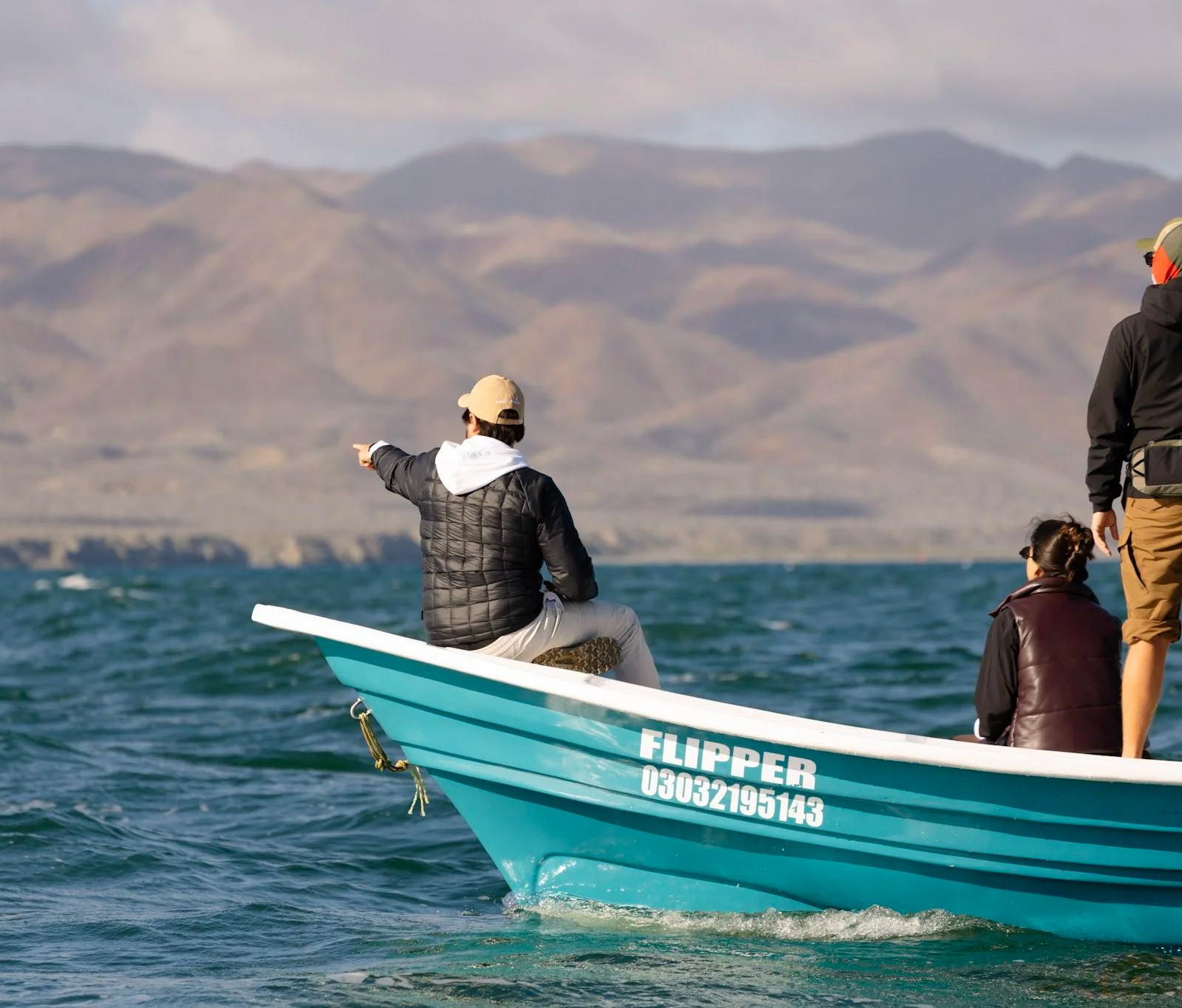
Our departures ran from January 15 to April 16, and in that window we logged more than 200 gray whale sightings, at every size: from adults in transit to mothers walking their calves through the channels. We don't keep the count to show it off. We keep it because a concrete number is what separates an honest account from a postcard, and because comparing seasons is the only way to notice when something arrives early, runs late, or stops happening.
The bay doesn't belong to the whales alone, either. Sea lions, shorebirds and migratory birds, and turtles all cross paths among the mangroves and sandbars: a lagoon complex that works year-round even if the travel calendar only looks at a few months.
As the season wound down and the last whales turned north, the bay didn't empty out: it changed rhythm. A bay resting from one phenomenon is already getting the next one ready.
What we learned
We repeat the first lesson every year, and every year it weighs more: showing up, season after season, is a form of care. Returning to the same water builds a knowledge no passing operator can have. We know where the swell breaks differently, when the wind turns, which channel wakes up full of life. That accumulated memory is, at bottom, the raw material of conservation: you can't protect what you don't know closely.
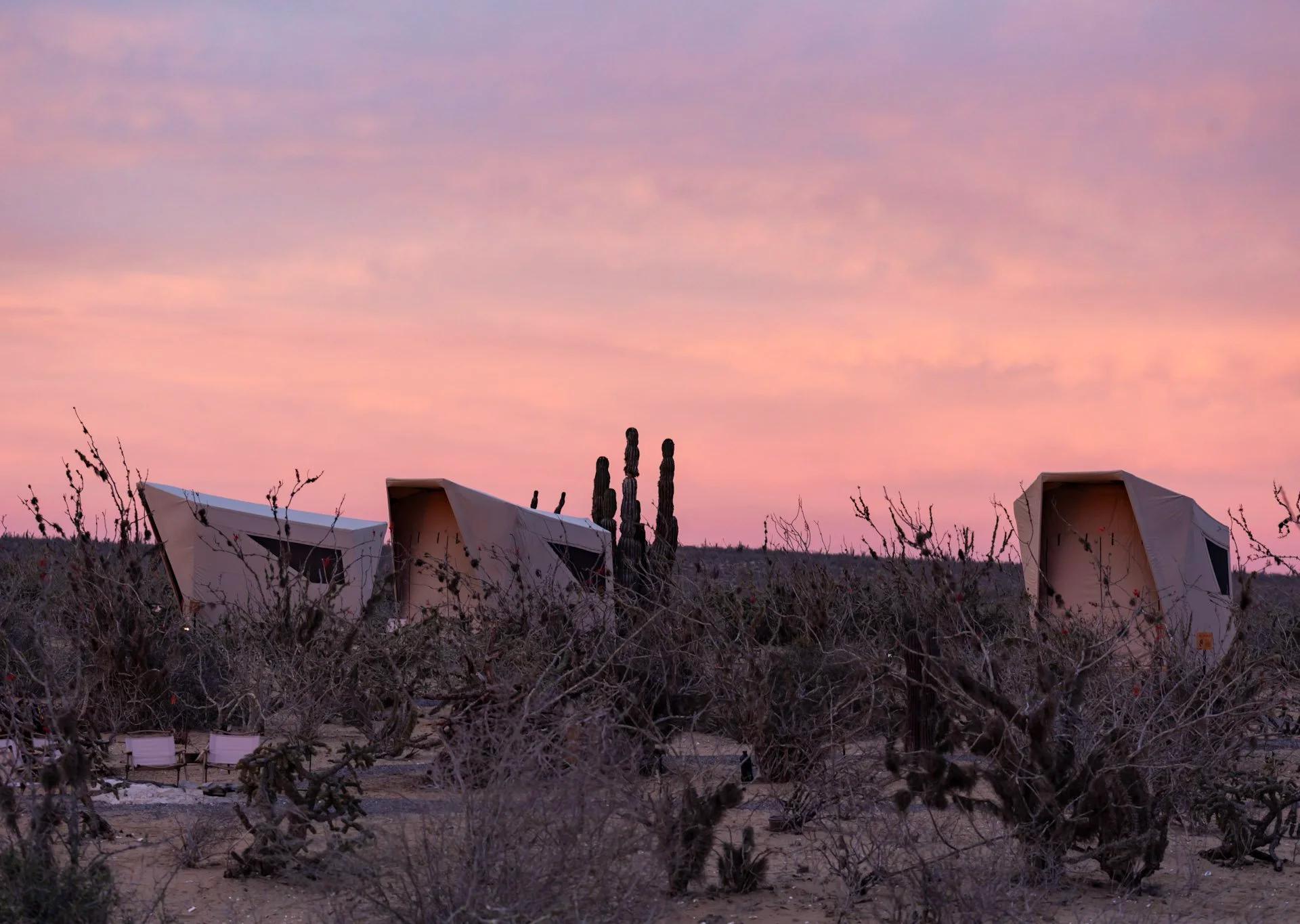
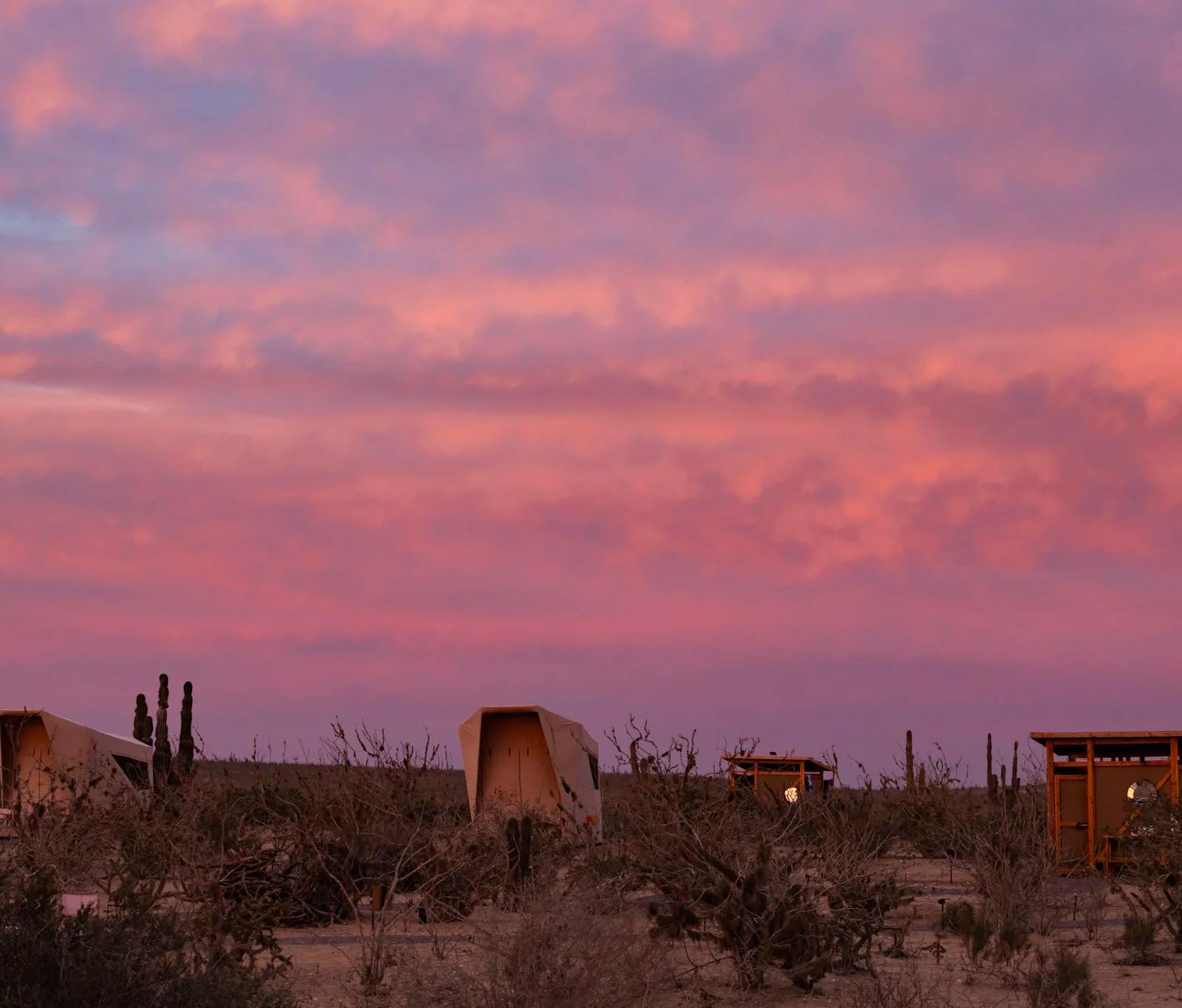
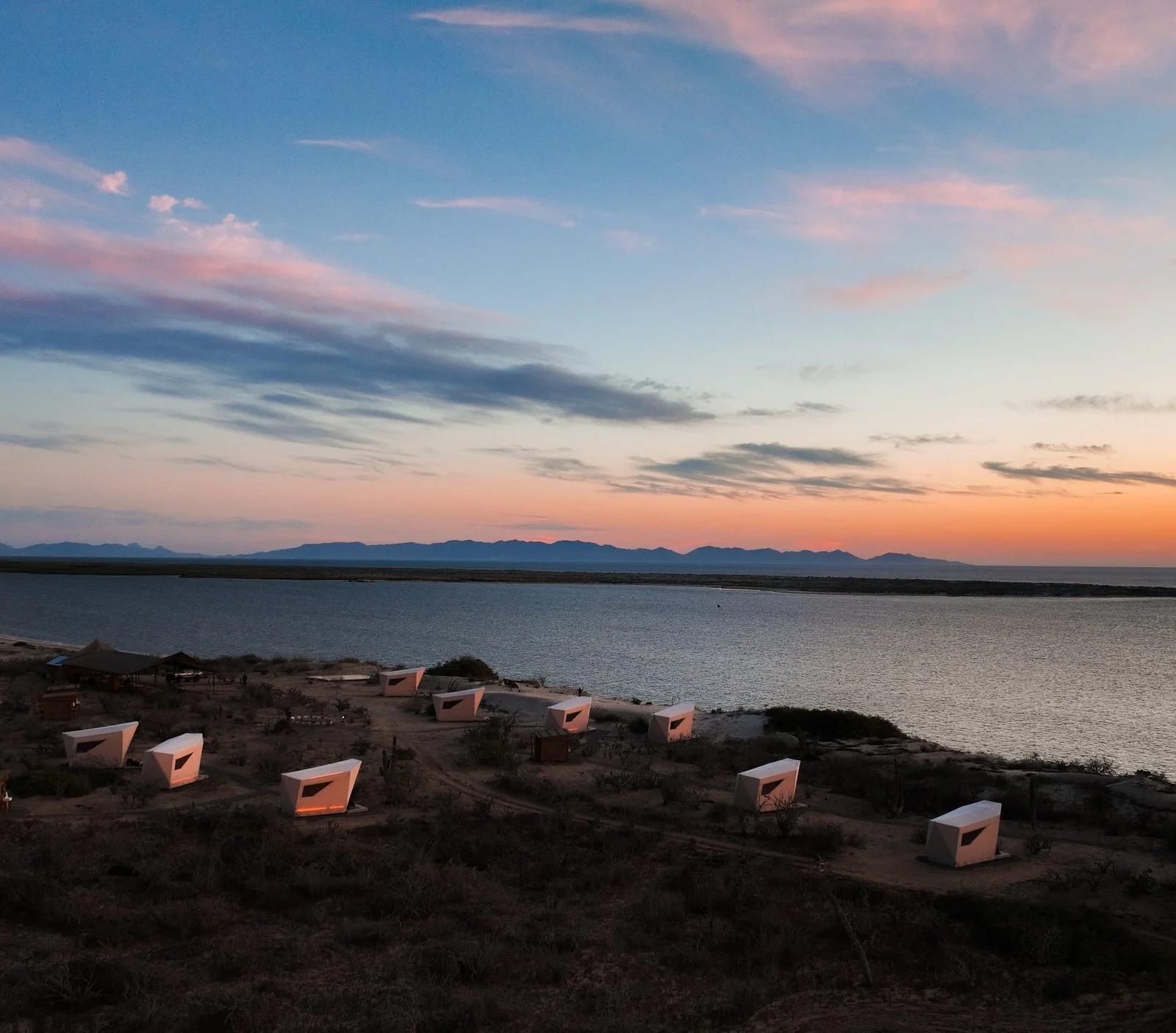
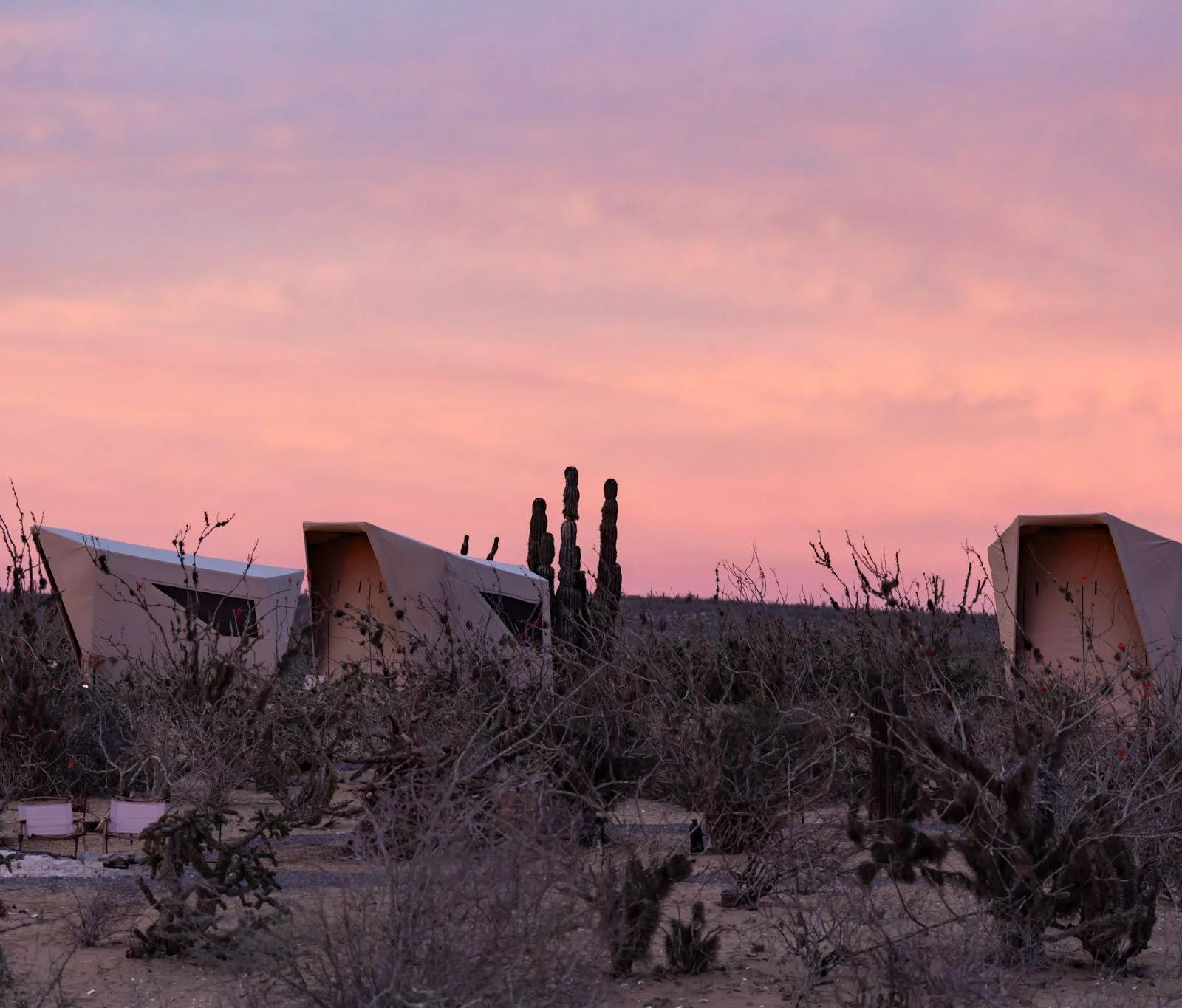
The second is that low impact isn't a talking point, it's a discipline. Our camp goes up and comes down without leaving a mark: prefabricated luxury tents, no rebar, no foundations, a fully reversible installation that doesn't disturb the ground. Energy use is deliberately low and guest capacity is capped on purpose. Seasonality isn't a commercial constraint, it's a conservation tool: we operate when the ecosystem allows it —and the observation seasons are authorized by the regulator, not by us— and we pull out when it's time to leave it alone.
The most uncomfortable decision of this season
Historically, the gray whale experience in Mexico has included moments of physical contact, especially in lagoons where the species comes up to the boats out of curiosity. For many travelers, it's the moment of the trip.
As of this season we've stopped doing it. We've adopted a strict policy of no physical contact with whales, because over the long run systematic contact doesn't look to us like a sustainable or replicable model if we're serious about protecting the species and its habitat. Our role is to observe, learn and protect; never to intervene.
We know giving that up costs us: it's the photo people come for. But if the extraordinary part of the experience depends on touching the animal, then the model has an expiration date. We'd rather it depend on respect, a prudent distance and the integrity of the ecosystem.
The log stopped being ours
This year the log left the notebook. We added the camp to iNaturalist, the global citizen science platform, with a project of our own where guests, guides and staff upload what they see: birds, turtles, invertebrates, whales. Every photo with a date and a location becomes a record anyone can consult.
It's the most honest version of what we were already doing. An observation written in a notebook disappears with the notebook; the same observation on an open platform helps monitor the region's biodiversity and lays the groundwork for research collaborations. It turns every guest into someone who contributes data, not just someone who takes in scenery.
The bay is held up by the people who know it
We've never run a season on our own. Our camp is at Médano Amarillo, and the bay is navigated with the people who were born reading it: the boatmen and the families of Puerto San Carlos and Ciudad Constitución, who know where the good water is, when the wind shifts and how to approach a whale without crowding it.
That relationship doesn't end with a season's wages. In the community of San Buto we work with La Ostra, a community oyster farm we've built into every itinerary: guests visit the farm, see how the oysters are seeded and eat there. Since we started working together, the family that runs it has improved its bathrooms and infrastructure, added shade and tables for visitors, and we've worked alongside them on their brand. Today we continue with the NGO Red de Turismo Sustentable and Fundación Gigante so that La Ostra can steady its income and reach economic self-sufficiency.
That's the mechanism we stand behind, and it's duller than it sounds: it isn't a donation, it's a visit that was already on the itinerary and now leaves income where it should stay. When a family earns more accompanying whales or seeding oysters than chasing the last of what's left in the sea, the whole sea switches sides. Conservation stops being imposed from outside and starts growing from within, held up by the people with the most to lose if the bay empties out.
Even the garbage went into that logic. We set up on-site waste separation, with stations by area and defined destinations: recyclables to the recycling station, organics to a local pig farm, and the cans stay with the staff. It isn't glamorous, but it's the difference between saying low impact and measuring it.
What comes next
The gray whale has already headed north, but the bay is only catching its breath before the next act. Between October and December the Marlin & Sardine Run arrives, when the Pacific lights up with one of the most intense hunting spectacles in the ocean: sardine schools moving as a single creature and, behind them, the megafauna chasing them. Later the humpback whale returns, and in time, the gray whale again.
We write this log partly so we don't forget. And partly to invite you to write the next entry with us, from the water.
Our Magdalena Bay experience
In Magdalena Bay we run four-day, three-night low-impact camps, built to bring you close to the phenomenon without weighing on it: careful hospitality, design and comfort in one of the most alive places in Mexico.
The next window is the Marlin & Sardine Run, October through December. And if the quieter encounter is more your thing, gray whale season comes back January through April 2027: capacity is limited, and you can choose your date and package now to confirm ahead of everyone else when we open.
You can read more about this region in our Magdalena Bay guide, on the best time to see gray whales and on the Sardine Run in Mexico.
Take a look at the calendar of upcoming departures and save your place for next season.
See you out there.