
Experiences
The Sardine Run in Magdalena Bay: The Most Underrated Marine Spectacle in the Mexican Pacific
May 27, 2026
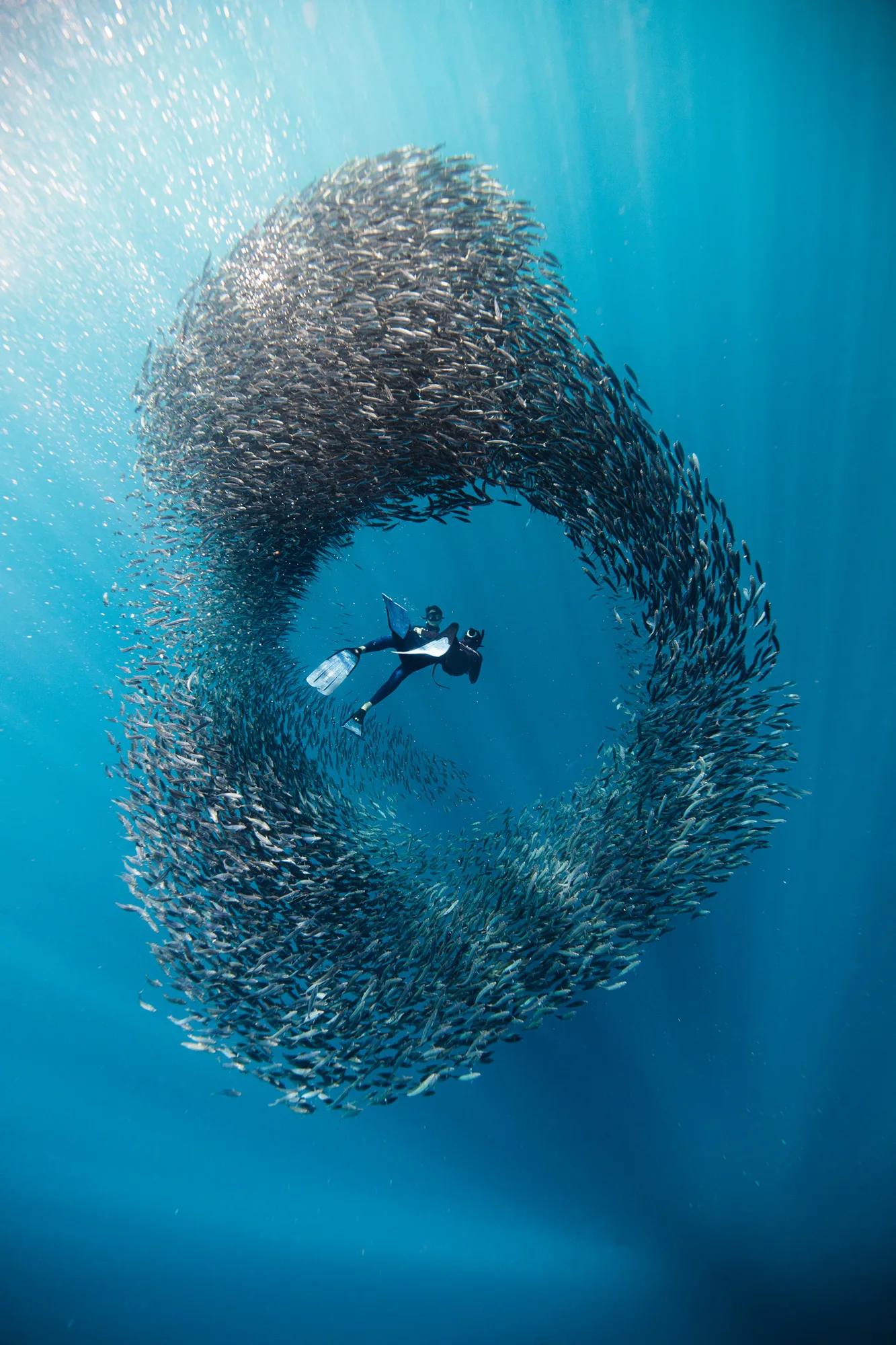
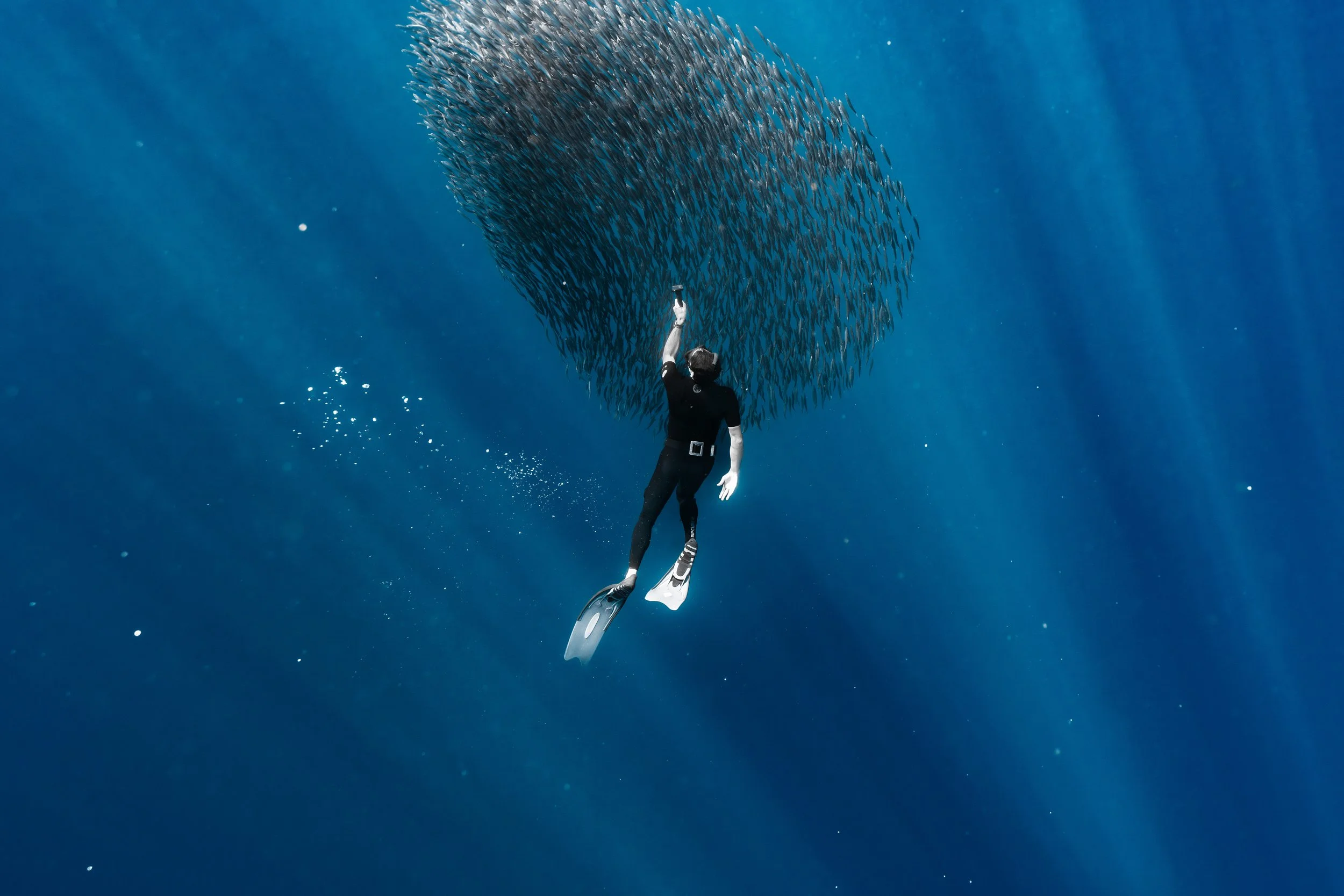
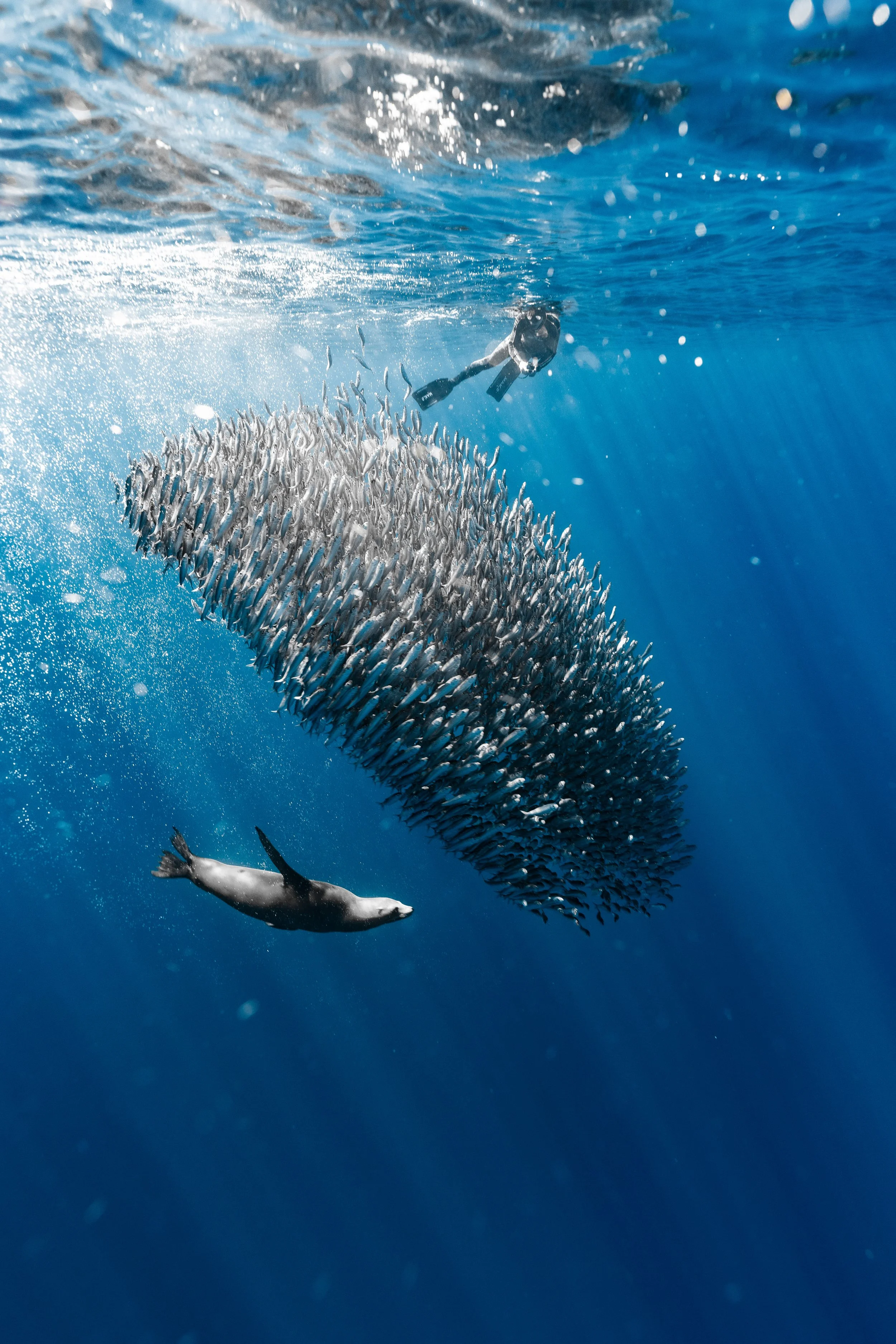
Imagine a school of fish the size of a city block moving underwater as a single organism. Imagine, all around, thirty striped marlins coordinating silently, driving the school toward the surface and charging at speeds of up to eighty kilometers per hour with their bill leading the way. Imagine, above, frigatebirds circling widely; all around, sea lions closing in; below, silky sharks waiting for the stragglers. Now imagine you’re there, snorkeling, just a few meters from the epicenter, as the light shimmers among thousands of silvery bodies. This happens every fall off the coast of Bahía Magdalena, in Baja California Sur, and yet almost no one talks about it. South Africa’s Sardine Run dominates documentaries, expeditions, and magazine covers. Mexico’s Sardine Run takes place just a few hours’ flight from any U.S. City, with warmer, clearer waters and smaller schools, and yet it remains one of the country’s least-known marine phenomena. This article is an honest attempt to explain why that should change. ## What Really Happens During the Magdalena Bay Sardine Run The Sardine Run is not a migration in the romantic sense of the word. It is the result of something more fascinating: the annual spawning of the Spanish sardine (Sardinops sagax) in the cold, nutrient-rich upwellings off Magdalena Bay between mid-October and December. When millions of sardines gather to spawn, the entire marine ecosystem of the North Pacific responds. Predators arrive to feed. The undisputed star of the feast is the striped marlin (Kajikia audax). It is one of the fastest fish in the ocean and, unlike other pelagic species, hunts in groups. The marlins surround the school, pushing it toward the surface and compressing it into a defensive sphere, known as a bait ball, and, once the school has nowhere to escape, they take turns attacking. The choreography is so precise that it seems rehearsed. It isn’t. It is the result of millions of years of cooperative evolution. All the other creatures join in around them: sea lions arriving in packs to close the flank; common and bottlenose dolphins also taking part; Bryde’s whales (Balaenoptera edeni) that appear at any moment and swallow whole mouthfuls of the school with their mouths wide open; silky sharks (Carcharhinus falciformis) circling the edges; and, above the water, dozens of frigatebirds and pelicans that sacrifice altitude to join the feast.
Why It's Different from South Africa's Sardine Run It's an inevitable comparison, and it's worth making it clearly. South Africa’s Sardine Run, which takes place between May and July along the coast from the Cape to KwaZulu-Natal, is led by dolphins, occurs in cold, choppy waters, and is typically observed from inflatable boats traveling at high speeds to keep up with the action. It’s spectacular, but also demanding: strong currents, limited visibility, jellyfish stings, and kilometers to cover each day. The one in Bahía Magdalena is something else entirely. Here, the star isn’t the dolphin but the striped marlin, a species that’s virtually absent from the African phenomenon. The waters are warmer, between 22 and 26 degrees at the height of the season, and visibility usually exceeds twenty meters. The trips are short because the bait balls are concentrated less than an hour from the coast. And, above all, the experience is enjoyed from the surface while snorkeling or free-diving: the noise and bubbles from the tank disturb both the school of fish and their predators, so scuba diving isn’t an option. What you lose in depth, you gain in proximity. Thirty marlins three meters away from you, with the light of the Pacific streaming through the water, it doesn’t feel like a documentary; it feels like you’re right inside one. ## When to Travel: The Exact Window The season runs from late October to early December, with the usual peak in November. There’s activity before and after that, but it’s erratic. What gives the phenomenon its consistency is precisely the sardine spawning, and that spawning follows its own schedule: it depends on water temperature, the California Current, and nutrient upwellings in the area. Some years it starts a week or two early; others, it extends into mid-December. A practical tip we’ve learned: traveling to Magdalena Bay during the first peak of the season, around the second or third weekend in November, usually offers the best combination of bait ball abundance, underwater visibility, and weather.
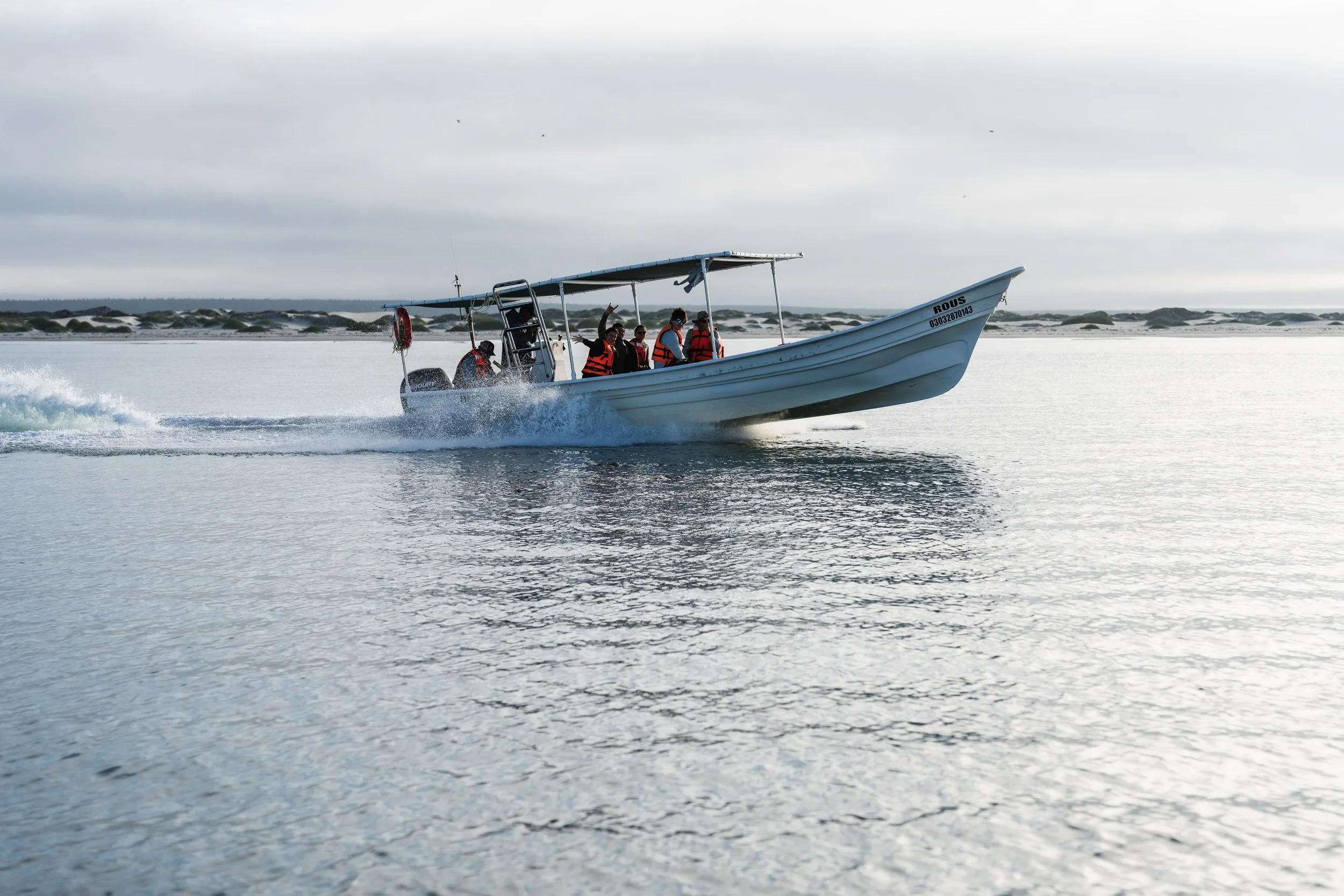
Who Are the Stars of the Feast - Striped marlin (Kajikia audax). The undisputed star. Hunts in groups. Bodies up to three meters long and documented speeds of 80 km/h. This is the only region in the Pacific where they are seen hunting at the surface with such consistency. - Spanish sardine (Sardinops sagax). The reason for it all. Its annual spawning attracts all the others. Without it, there is no Sardine Run. - California sea lion (Zalophus californianus). Hunts in packs. Coordinates with the marlins even though their hunting times differ. It’s common to see the sea lions finish what the marlins start. - Bryde’s whale (Balaenoptera edeni). It appears without warning. A single whale can empty an entire bait ball in just a couple of bites. - Silky shark (Carcharhinus falciformis). An opportunistic hunter. It usually circles the edges and snatches up stragglers. - Common and bottlenose dolphins. They arrive in large groups; sometimes they lead the hunt for the school before the marlin takes over. - Magnificent frigatebirds and pelicans. They mark the spot from the sky. For those who know how to read their behavior, they’re the best clue as to where the action is. ## Who Can Experience It You don’t need to be a certified diver. The phenomenon takes place in the first few meters of water, so divers of every level see a different version of the same thing: - Snorkeling, from the surface, you can see the coordinated attacks of the predators and the birds diving in. - Free diving: The encounter is silent and up close, without bubbles, the school doesn’t scatter. - Scuba diving: The full spectacle unfolds during deeper dives. The minimum gear is a 5 mm wetsuit, mask, snorkel, and fins. The rest is patience: predators don’t perform on demand, and the key is to wait for the right moment, not to chase it. ## How to Experience It Responsibly This is what distinguishes a well-executed outing from a poorly executed one. - Snorkeling and free diving only, never scuba diving. Noise and bubbles scatter the bait ball and disrupt the predators’ behavior. A trip with scuba divers can ruin half a day’s action for the rest of the boats in the area. - Small boats: engines off when approaching. The school collapses when a panga boat passes over it. Reputable operators keep their distance, read the wind and the frigate birds, and let the school settle before snorkelers enter the water. - Small groups. Six to eight people per boat is the right number. Any more than that, and the school becomes stressed, the marlins swim away, and the experience is diminished for everyone. - Do not touch, do not chase, do not persist. If the bait ball moves away, look for another one. The universal rule of marine wildlife viewing: if you have to chase it, you’re already doing it wrong. These rules aren’t about moralizing, they’re the only way to ensure the phenomenon continues to exist. The striped marlin is classified as Near Threatened by the IUCN; fishing pressure and chronic stress from poorly managed tourism are two of the reasons. Taking care of the trip is, literally, taking care of the show. ## The Community Behind the Phenomenon Magdalena Bay is not a traditional tourist destination. It is, first and foremost, a fishing port and an internationally recognized wetland: the bay is part of the Hemispheric Network of Shorebird Reserves, is home to the largest mangrove forest on the Baja California Peninsula, and is one of only three lagoons in the world where gray whales breed each winter. Puerto San Carlos is the community that has been gradually transforming from a town dedicated exclusively to fishing into a mixed-economy town where seasonal ecotourism is beginning to generate income that rivals that of fishing. This transition is not merely superficial. When a fishing family discovers that taking travelers out to see marlins for six weeks earns them more than fishing for marlins all year long, their incentives shift. The fisherman who knows the currents, the wind, and the fish schools’ routes better than anyone else becomes, without the need for speeches, the best guardian of the ecosystem that once sustained him through fishing. It is the same model we saw take root in La Ventana and that we are now seeing emerge in San Carlos. Conservation isn’t decreed. It is built by making conservation more valuable than extraction.
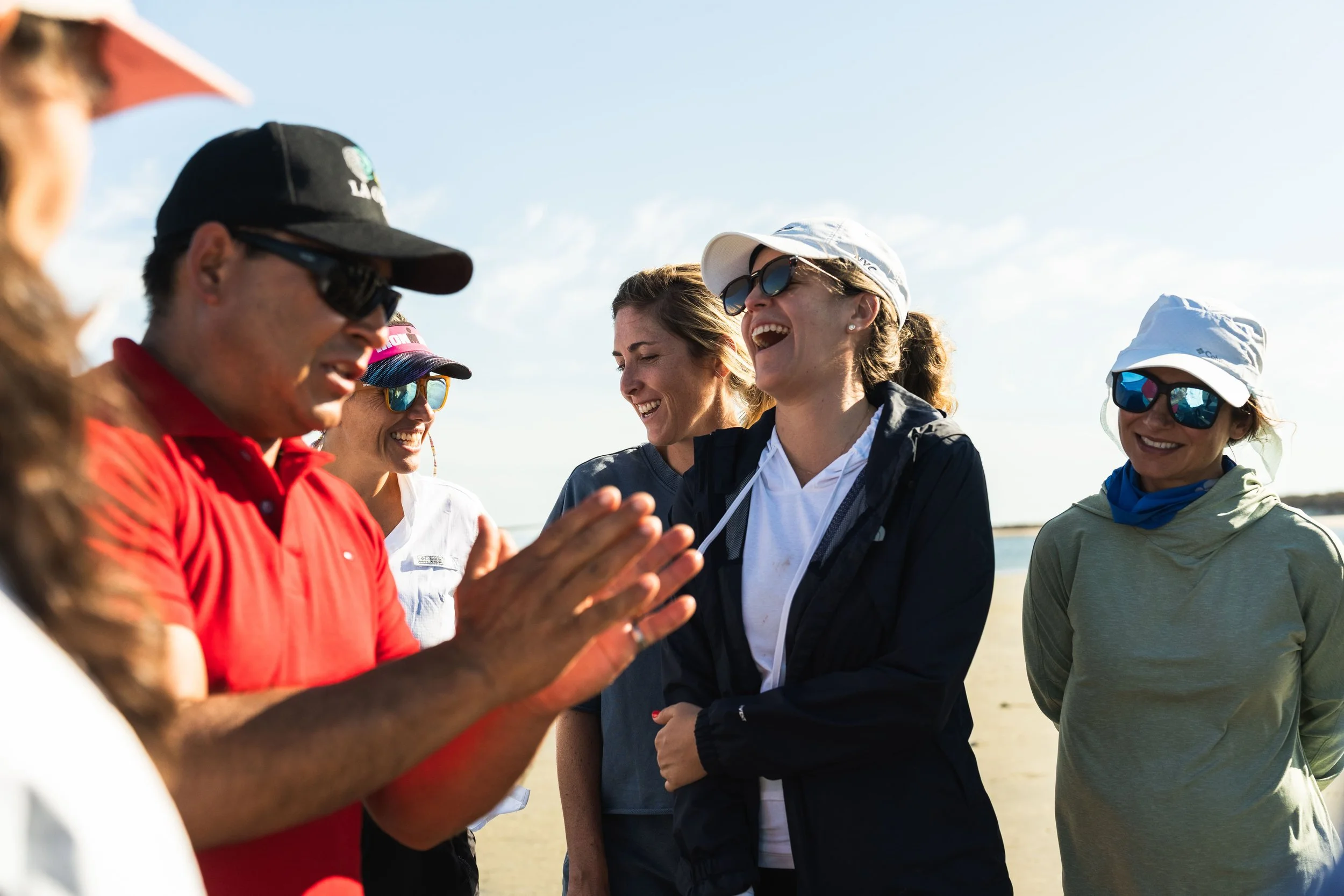
Our Experience in Magdalena Bay
At Akampa, we designed the Marlin & Sardine Run with that in mind. Four days, three nights, a low-impact luxury camp right on the water, and daily outings on small boats with local guides who have been navigating these waters for decades.
We don’t promise to see the same thing every day, because no one can promise that when it comes to a wild phenomenon. What we can promise is that we’ll be where the school of fish is, with the people who know it best, and that every guest who travels with us contributes directly to the community that makes this model possible.
If you want to understand why Bahía Magdalena is unlike any other destination on the Pacific coast, next fall is the time to go. Spots fill up three months in advance, and the 2026 calendar is already open.
Check out the dates, details, and availability for the Marlin & Sardine Run expedition in Magdalena Bay.