
Regenerative Tourism
Luxury glamping in Mexico: not everything called glamping really is
June 9, 2026
The word “glamping” has lost its edge from overuse. Today it covers a beachfront expedition designed down to the detail and a plastic tent with string lights next to an inflatable pool. It became a marketing label before it was a promise kept, and that leaves the traveler in an awkward spot: booking blind, trusting a word that no longer guarantees anything.
It’s worth stopping there, because the difference isn’t budget. There is expensive glamping that isn’t luxury, and there are camps in remote places that are luxury through and through. Real luxury in nature isn’t measured in amenities but in something harder to fake: the relationship between what the guest gets and what the place doesn’t lose. This guide offers an honest way to tell them apart, with concrete criteria for recognizing real luxury glamping and choosing well where to sleep under the stars in Mexico.
What glamping is (and what it stopped meaning)
Glamping is a contraction of glamorous camping: the idea of bringing people close to extraordinary places without giving up comfort or design. Camping with soul and a real bed. It began as a generous promise, sleeping inside nature without sacrificing rest, and for a while that was enough to define it.
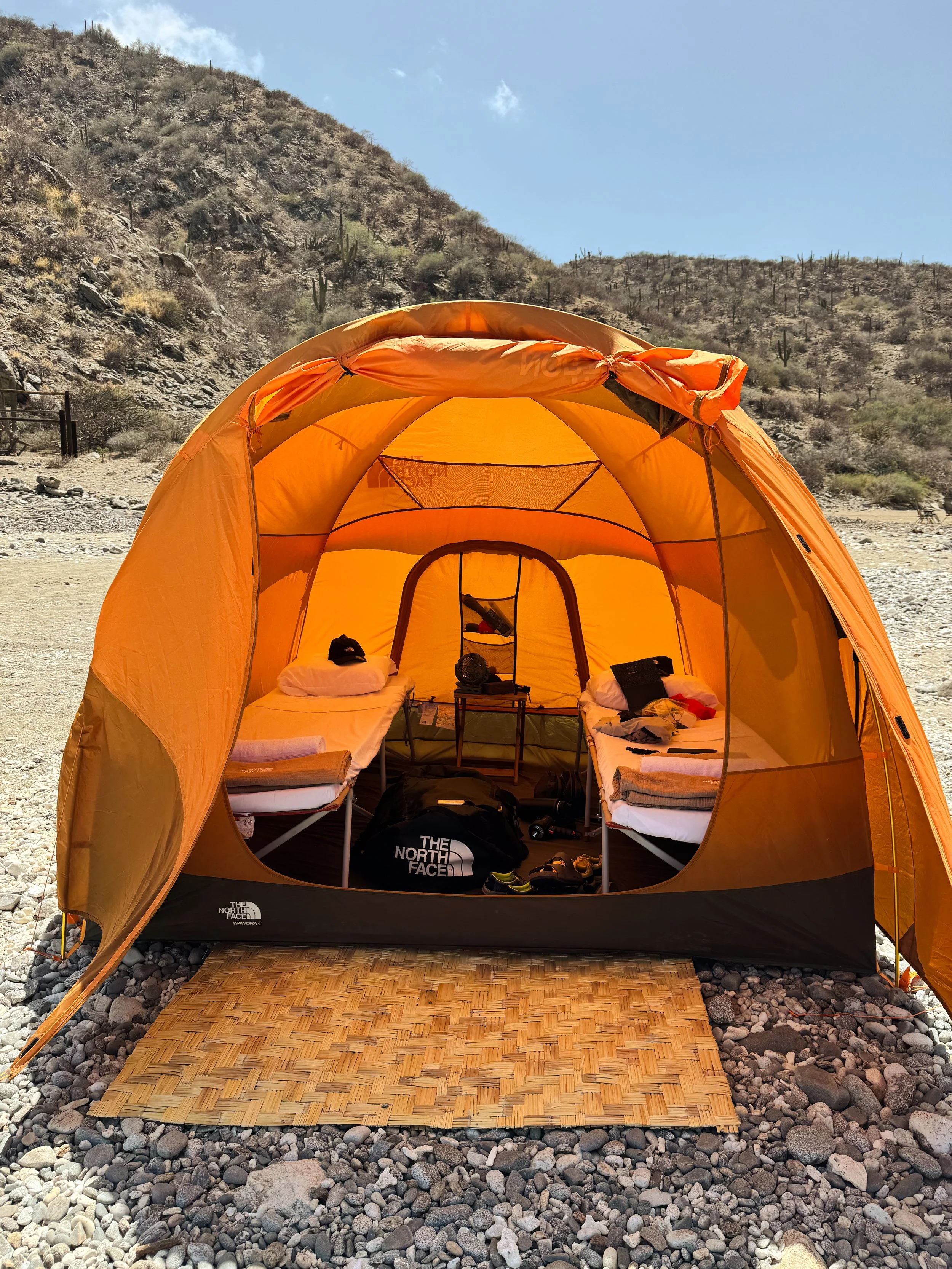
But as the category grew, the word stretched to cover almost anything with a tent and a good camera angle. The problem isn’t aesthetic, it’s structural. Much of what sells itself as luxury glamping repeats the model it claims to avoid: permanent construction dressed up as a camp, high energy and water use, capacity maximized to fill every night, and a relationship with the surroundings that is stagecraft rather than care. The place gets used until it’s spent. When that happens, luxury is a surface: it lasts as long as the photo.
Glamping, camping, and boutique hotels: what’s the difference?
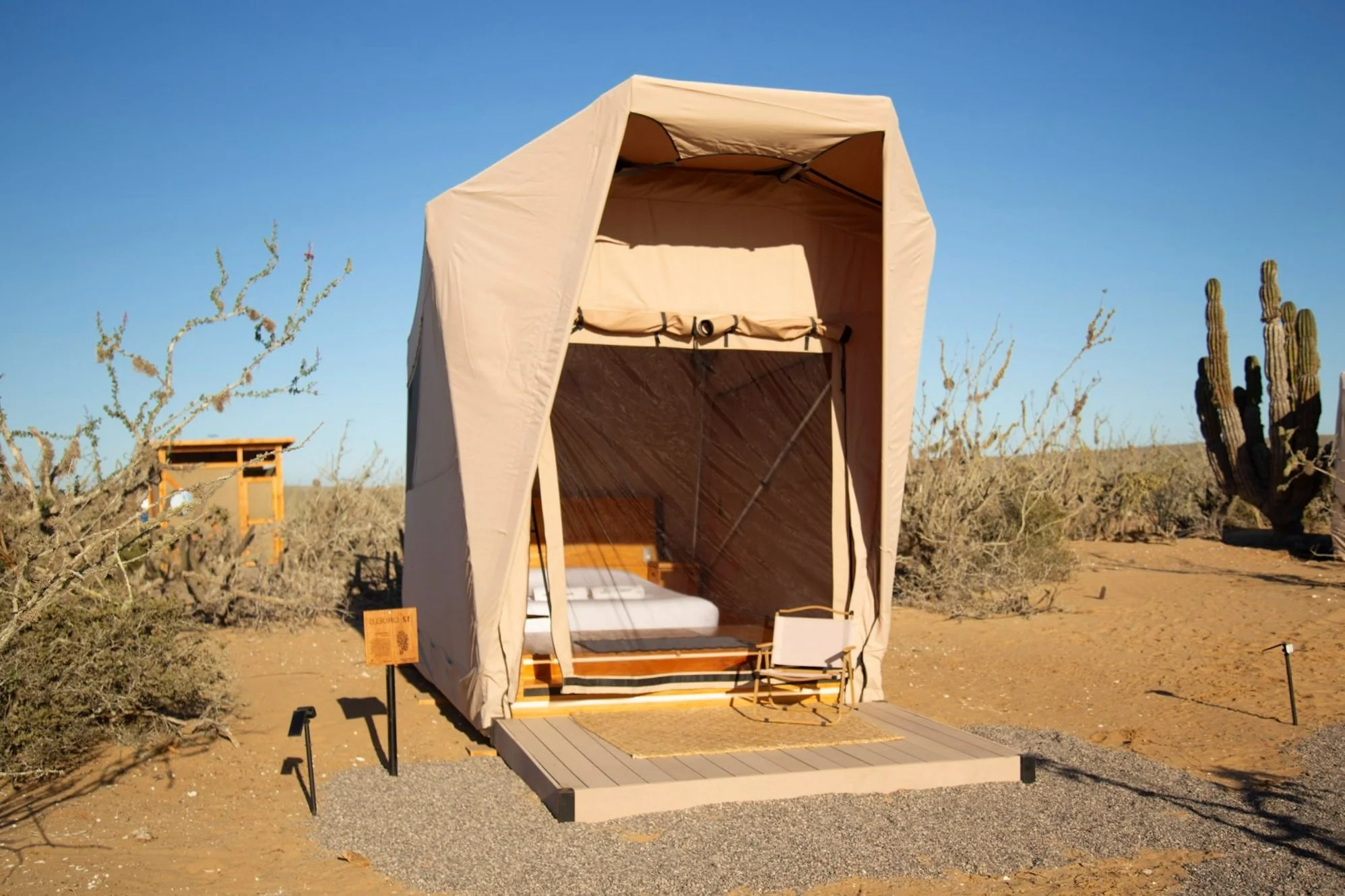
The three terms get used as synonyms, and they aren’t. Traditional camping is self-sufficient: you bring the gear, pitch your own tent, and solve comfort yourself. A boutique hotel gives you design and service, but inside a fixed building that walls you off from the surroundings. Glamping lives in between: the comfort and design of a good hotel, inside nature, without the walls that keep it out.
Luxury glamping adds a layer the other two don’t necessarily have: the operation is built not to degrade the place that makes it possible. That’s the distinction that matters, and the one marketing blurs most. It isn’t only sleeping well somewhere beautiful. It’s that the place is still extraordinary after you leave.
How to recognize real luxury glamping
Before you book, six questions separate an experience designed with judgment from an empty label. They aren’t a matter of taste. They’re a matter of integrity.
1. Is the setup reversible? The most serious natural luxury leaves no permanent trace. It goes up and comes down with no foundations, no rebar driven into the ground, no change to the structure of the soil. If the place goes back to being exactly what it was when the season ends, you’re on the right track. If there’s concrete, it isn’t a camp. It’s a building with a nice name.
2. How many people fit? Privacy isn’t an add-on, it’s the definition. A camp that caps its capacity on purpose is choosing conservation over filling beds. The right question isn’t “what’s included?” but “how many of us will there be?” Silence and space are the first sign of real luxury.
3. Is the comfort real or is it styling? An excellent bed in the middle of nowhere is harder to pull off, and worth more, than a photogenic tent with a thin mattress. Luxury in remote places is tested at night: how you sleep, how you shower, how well the invisible parts have been solved. Design that only works on camera doesn’t survive four days.
4. Is nature the subject or the set? In an honest experience the surroundings are in charge: the boat goes out when the tide allows, not when the schedule says; the itinerary bends to the animal, not the other way around. When nature is only a background for amenities, something has been inverted. The place should be the reason for the trip, not its scenery.
5. Who benefits from your visit? A well-designed trip leaves direct income with the community that looks after that territory: local guides, local cooking, local boats. If all the value leaves with an outside operator and the community only supplies the landscape, the model extracts instead of regenerating. It’s also what keeps the place there at all.
6. Do the people who receive you know it from the inside? Knowledge of the ground can’t be improvised. A team that lives in the area the rest of the year, that reads the sea, knows where the sandbar is, knows the region, is the difference between being taken to see something and being helped to understand it.
Luxury isn’t excess: it’s access
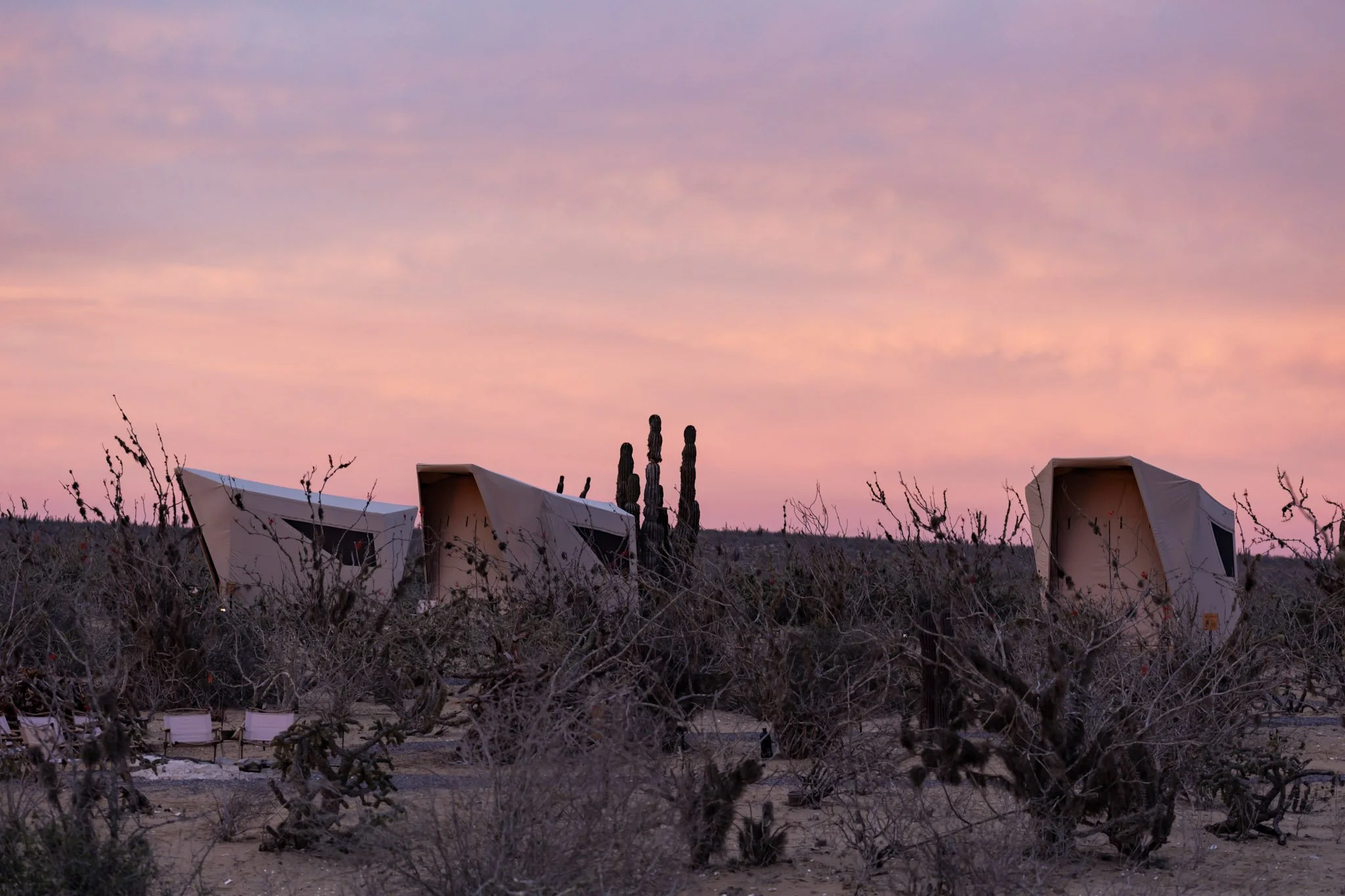
Here is the turn that orders everything else. Luxury, in nature, doesn’t mean stacking up comforts until the place disappears underneath them. It means access to the extraordinary under conditions that used to look incompatible: sleeping in front of an intact ecosystem in an impeccable bed, waking up inside the phenomenon instead of watching it from a distance, being somewhere remote without giving up design or safety.
Seen that way, conservation and luxury aren’t opposites. They need each other. The only way an extraordinary place is still extraordinary in ten years is if its use doesn’t wear it down. Low impact isn’t a concession the guest makes; it’s the condition that keeps alive the thing they traveled for.
Is luxury glamping sustainable? It depends on the model
Not all glamping is sustainable by definition, and the word deserves suspicion when it turns up without proof. What makes a camp sustainable isn’t a natural aesthetic. It’s three operating decisions you can check.
The first is how the camp is installed. A low-impact camp goes up on a reversible scheme, prefabricated tents, no foundations, no disturbance of the soil, so nothing structural is left when the season ends. The second is how energy, water and waste are handled: how much it consumes, where that energy comes from, what share of the waste is separated and carried out of the ecosystem. The third is capacity and seasonality used deliberately as conservation tools rather than commercial limits: fill less to wear less.
The useful question, then, isn’t “is it sustainable?” but “how do you show it?” A serious operator can answer with concrete detail. One that only says so on its website rarely can.
Where to go for luxury glamping in Mexico
Mexico has no shortage of places; what’s scarce is the judgment to inhabit them without using them up. Baja California Sur is, for us, the clearest case in the country: the Sea of Cortez, which Jacques Cousteau called “the world’s aquarium” and which UNESCO recognizes as a World Heritage Site for holding close to 39% of the planet’s marine mammal species, has a biodiversity few places match, in landscapes of desert and water that lend themselves precisely to a reversible camp.
In Magdalena Bay, on the Pacific coast of Baja California Sur, the system of lagoons and mangroves becomes each winter one of the few lagoons in the world where the gray whale comes to calve and raise its young, and the rest of the year it gathers humpback whales, the Sardine Run, and a blue economy that supports the communities around it. It’s where luxury glamping and conservation stop being two separate conversations.
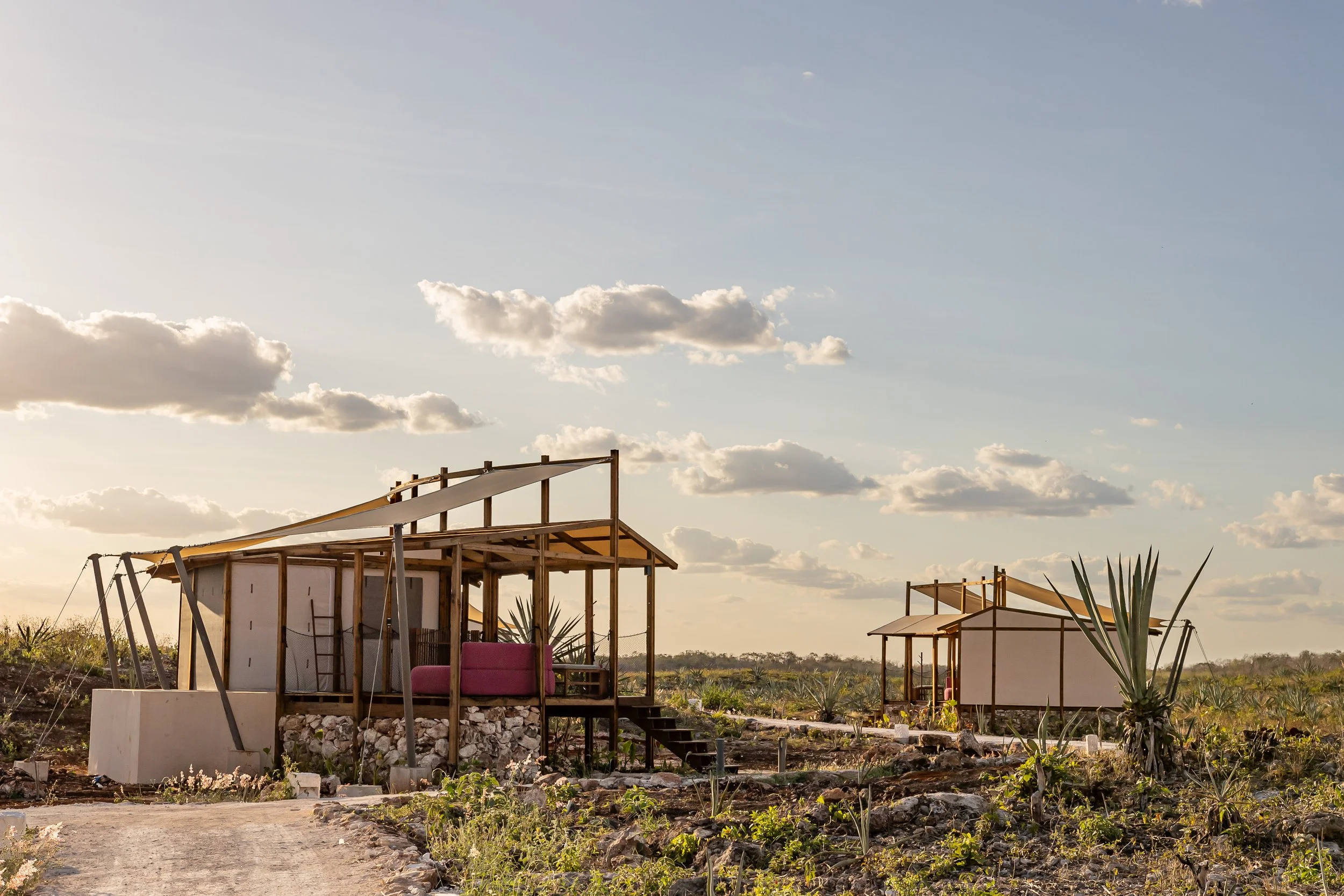
Further south, in La Ventana, the same principle repeats with different wildlife: the mobula ray aggregations in spring, the thermal wind of winter, and Isla Cerralvo close by. And in the Yucatán jungle, the logic of the low-impact camp moves from the sea to the cenotes and the Mayan forest. Different ecosystems, one idea: be inside without leaving a mark.
When to go: best season by destination
The “when” depends less on the weather than on what you want to find. In Magdalena Bay, gray whale season runs from winter into early spring; the Sardine Run concentrates toward autumn. In La Ventana, mobula rays aggregate between May and July, while the wind for kitesurfing arrives from November to March. In the Yucatán jungle, the camp runs on the seasons of the forest and the cenotes. The simple rule: choose the encounter first and the date settles itself.
How we do it at Akampa
We’re not a tourism company that does conservation; we’re a conservation company that tourism keeps running. That’s why our camps go up on a put-up, take-down scheme: prefabricated luxury tents, no foundations, no disturbance of the soil, fully reversible when the season ends. We hold capacity and seasonality as conservation tools, we separate and carry most of the waste out of the ecosystem, and we’re working toward an operation that leans less on diesel and more on solar. The idea that orders us is easy to say and hard to keep: scale the revenue without scaling the impact.
In Magdalena Bay that means four days and three nights in front of one of the most alive ecosystems in Mexico, with comfort solved down to the parts you don’t see, days on the water read by people who know the bay from the inside, and a trip that leaves something with the community instead of taking from it. We’re not proposing a label. We’re proposing the real version of what that word promised.
You can see dates, details and availability for our Magdalena Bay expeditions.
See you out there.
Frequently asked questions
What is luxury glamping?
It’s a way of staying somewhere that combines the comfort and design of a good hotel with the immersion of camping, inside nature and with no permanent construction. In its serious version it adds a low-impact operation built not to degrade the surroundings that make it possible.
How is glamping different from a hotel or from camping?
Unlike camping, you don’t have to bring or pitch your own gear: comfort is already solved. Unlike a hotel, there are no fixed walls between you and the surroundings, and the camp is usually reversible, with no foundations. Glamping lives between the two: design and rest without giving up being inside nature.
Is luxury glamping sustainable?
Not by definition. It depends on the model: reversible installation, responsible handling of energy, water and waste, and capacity capped on purpose. The useful question isn’t whether an operator calls itself sustainable, but whether it can show it in concrete detail.
Where can you go for luxury glamping in Mexico?
Baja California Sur is the clearest case, in particular Magdalena Bay (gray whale, humpback whale, Sardine Run) and La Ventana (mobula rays, wind, Isla Cerralvo). The Yucatán jungle moves the same low-impact logic to the cenotes and the Mayan forest.
When is the best time for glamping in Baja California Sur?
It depends on the phenomenon: gray whale in Magdalena Bay during winter; mobula rays in La Ventana between May and July; kitesurfing wind from November to March. Choose the encounter first and the date falls into place.