
Magdalena Bay, Baja California Sur: untamed nature, vibrant communities, and one of Mexico's richest ecosystems
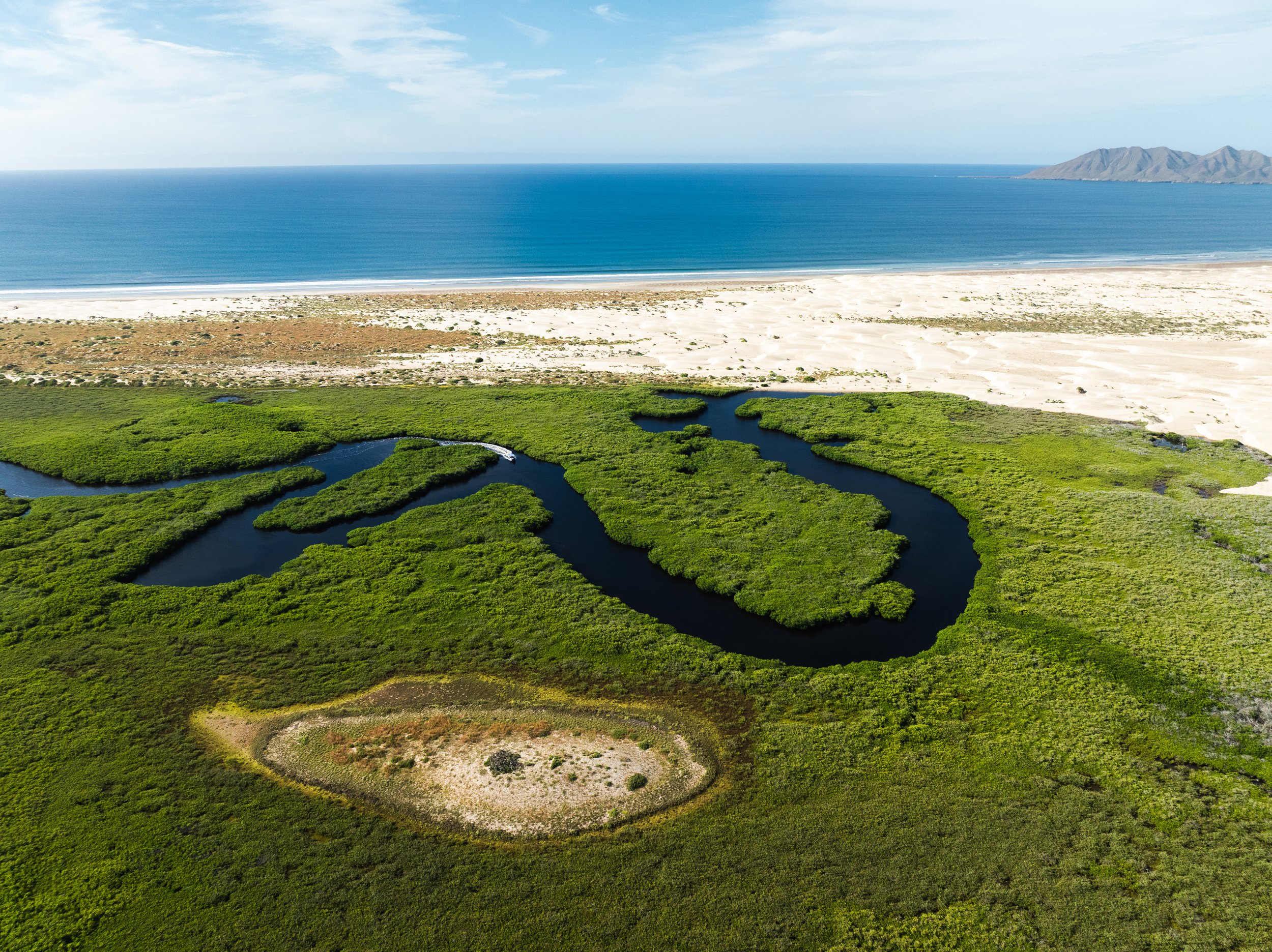
Dunes and mangroves of Magdalena Bay. Photo by @pablosky.mx
Where is Magdalena Bay, and why is it so special?
Magdalena Bay, located on the Pacific coast of Baja California Sur, is one of Mexico's most important lagoon systems. Protected by barrier islands and connected to the open ocean, this bay combines mangroves, estuaries, dunes, and deep sea in a single ecosystem.
It is not a mass tourism destination. There are no large hotels or beachfront developments. What there is, however, is something much more valuable: an unspoiled environment where nature still sets the pace.
Here, the ocean and the desert coexist. In just a few hours, you can sail among mangroves teeming with birds, cross endless dunes, and end the day watching the sun set over calm waters that reflect the sky like a mirror.
Natural wealth: mangroves, desert, and open sea
Magdalena Bay is a transitional ecosystem, which makes it a place of extremely high biological productivity.
Mangroves and estuaries
Mangroves function as natural nurseries for fish and crustaceans. In addition:
They protect the coastline.
Filter sediments
They sustain a complex food chain.
They are habitats for multiple species of migratory birds.
To navigate its canals is to enter a silent world where every movement reveals life.
Coastal desert
Surrounding the bay is the characteristic landscape of Baja: cardon cacti, desert scrub, salt flats, and seemingly endless dunes. This combination of lush greenery and arid sand creates a striking visual contrast.
Open sea
On the other side of the barrier islands lies the wild Pacific Ocean. This is where migratory routes connect and phenomena such as the Sardine Run occur.
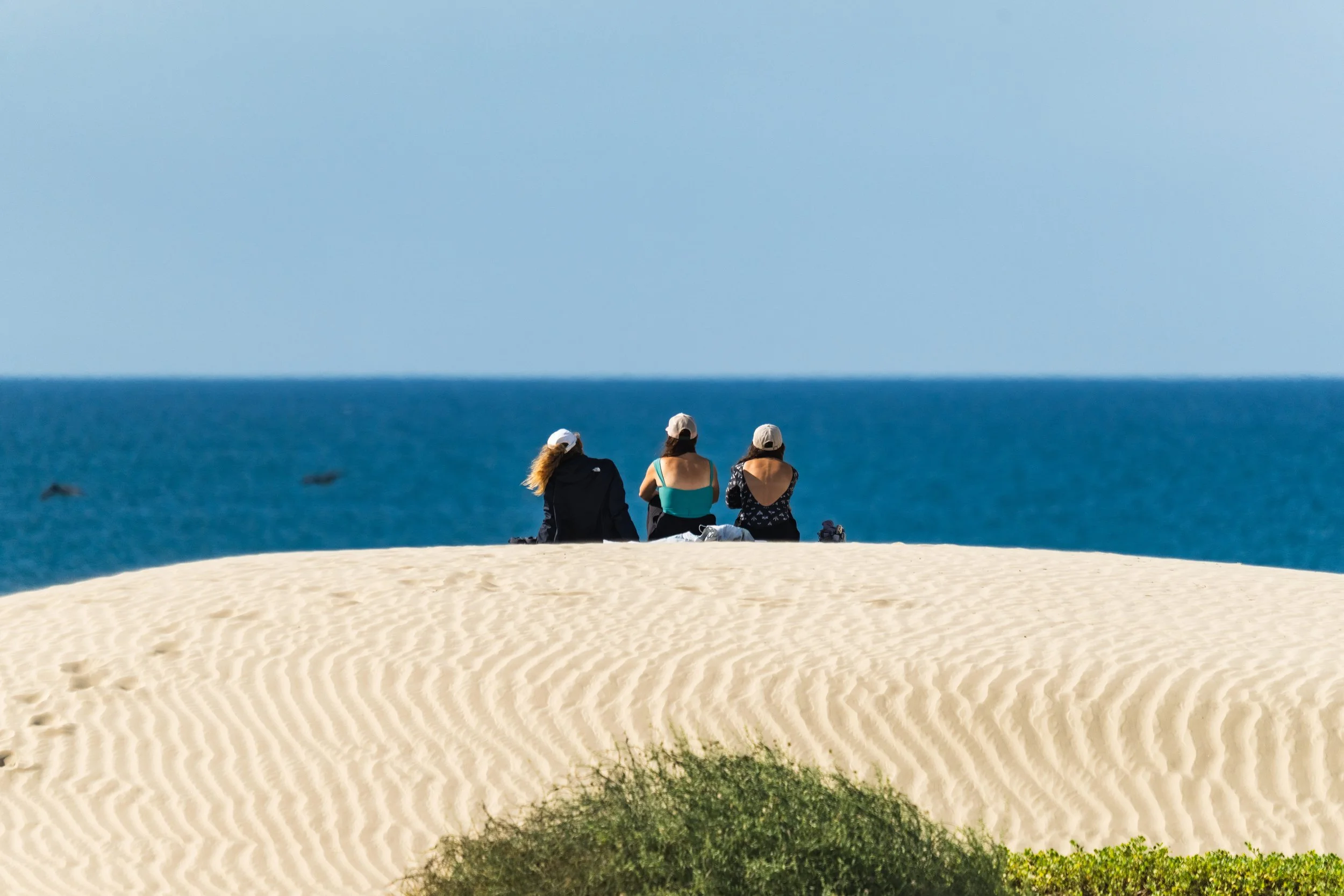
Dunes of Magdalena Bay. Photo by @pablosky.mx
Emblematic wildlife of Magdalena Bay
MagBay is synonymous with memorable encounters with wildlife.
Among the most notable species are:
Gray whale
Dolphins
Sea lions (depending on area and season)
Sea turtles
Seabirds such as pelicans, frigatebirds, and oystercatchers
Striped marlin (during the Sardine Run)
Depending on the season, the experience changes completely.
Gray whale season in Magdalena Bay
One of the main reasons to visit the bay is to watch gray whales.
Every winter, these giants migrate from the Arctic to the protected waters of Baja California Sur to reproduce and give birth.
When is the best time?
From late December to March or early April
The busiest months are usually February and March.
During this season, whales use the lagoons as natural sanctuaries. Sometimes, close encounters occur when the animals decide to approach the boats.
It is a deeply moving experience and one of the most impressive natural phenomena on the planet.
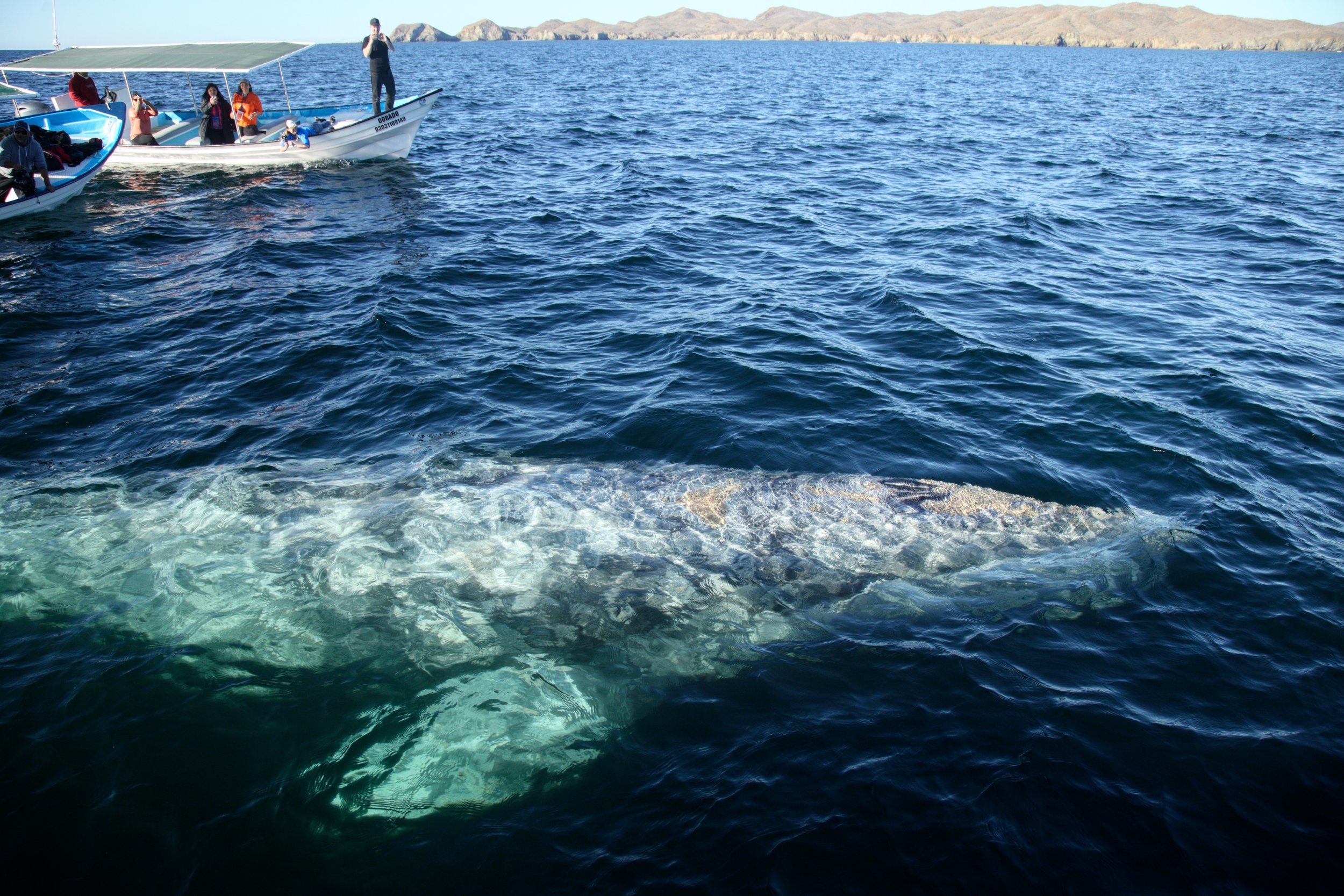
Gray whale in Magdalena Bay. Photo by Gerardo Adame.
Sardine Run in MagBay: the ocean at its most intense
If winter is contemplative with the gray whale, autumn is pure adrenaline.
Between October and December, millions of sardines form enormous schools that attract predators such as:
Striped marlin
Dolphins
Sea lions
Seabirds
This phenomenon, known as the Sardine Run, transforms the sea into a dynamic setting where everything happens at once.
For divers, freedivers, and snorkelers, it is an experience comparable to the great nature documentaries.
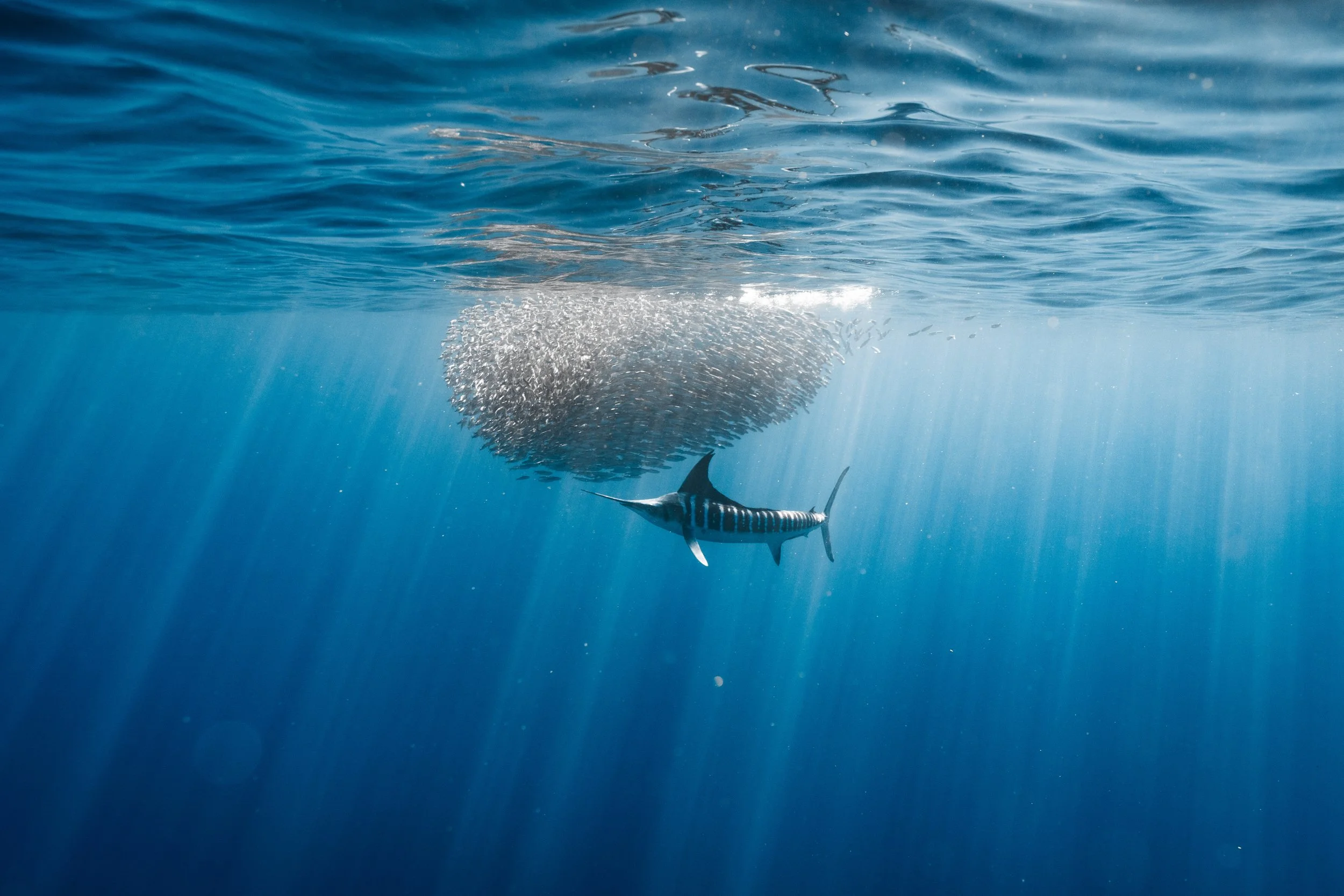
Striped marlin in sardine run by @pablosky.mx
Communities of Magdalena Island and Margarita Island
Magdalena Bay is not only biodiversity; it is also home.
Isla Magdalena and Isla Margarita are home to communities whose history is deeply linked to the sea.
Primary economic activity
Traditionally, the local economy has been based on:
Coastal fishing
Management of marine resources
Productive activities linked to the coastal ecosystem
The sea is not just a landscape: it is sustenance, identity, and culture.
When tourism is developed with a focus on conservation, it can become a complementary alternative that diversifies income and strengthens the local economy without replacing its essence.
Magdalena Bay as a conservation tourism destination
MagBay still retains something that many places have lost: scale and authenticity.
Tourism here only makes sense if it complies with three fundamental principles:
Absolute respect for wildlife
Real benefit for local communities
Active protection of the ecosystem
Traveling to Magdalena Bay can be much more than an aesthetic experience. It can be a way to participate in the conservation of the place.
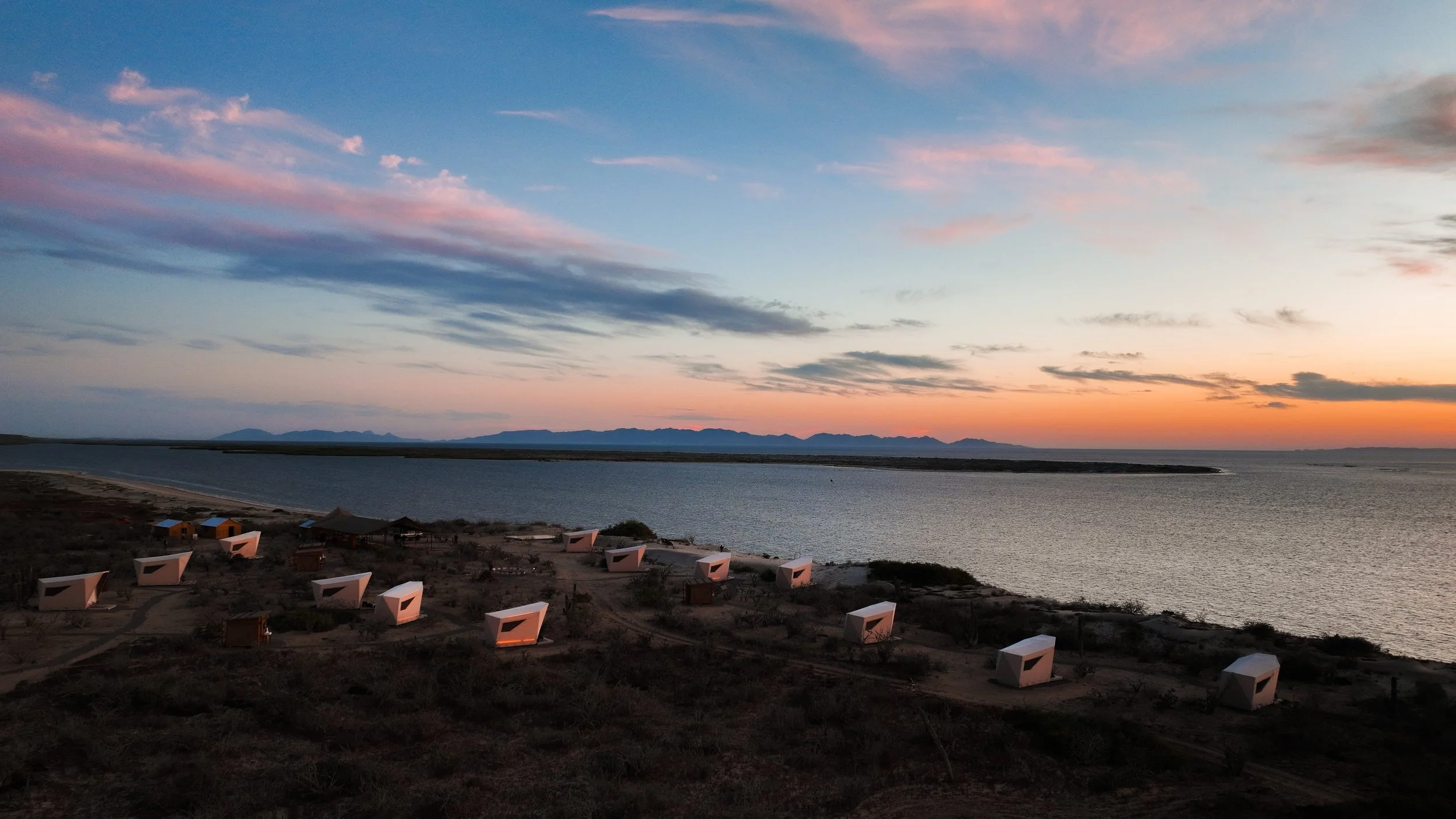
Magdalena Bay Ocean Camp by Akampa. Photo by @pablosky.mx
The Akampa camp in Magdalena Bay
Experiencing Magdalena Bay from a campsite completely changes the experience.
Instead of arriving, observing, and leaving, the camp allows:
Waking up facing the sea
Head out early to look for whales or signs of the Sardine Run
Returning at sunset with the sky painted in intense colors
Sleep under one of Mexico's clearest starry skies
The focus is not on mass luxury, but rather on comfort integrated into the environment, small groups, and guides who know the sea and the territory.
Here, the goal is to create an intimate, authentic experience that is aligned with conservation.
How to plan your trip to Magdalena Bay
Some practical recommendations:
Choose the season based on the experience you are looking for:
Gray whale → Winter
Sardine Run → Fall
Consider arriving in La Paz at least one day before the start of your expedition.
Wear layers of clothing for cold mornings and biodegradable sunscreen.
Get ready to disconnect: here, luxury means silence and nature.
Magdalena Bay: a place to experience, not just visit
Some destinations entertain, while others transform. Magdalena Bay belongs to the latter.
Its natural wealth, the life of its communities, and the intensity of its marine seasons make each visit unique.
It is not a place to pass through. It is a place to stop, observe, and understand that there are still corners of the world where nature still has the final say.
👉 Discover Magdalena Bay with the Akampa camp. Akampa camp and experience an expedition designed with respect, depth, and a real connection to the ocean.