Regenerative Tourism
How to travel to Baja California Sur without falling into the all-inclusive trap
July 22, 2026
There’s a question worth asking before you book the next trip to the south of the peninsula: if you’re going to cross half a country (or half a continent) to reach one of the liveliest seas on the planet, why spend four days without leaving the hotel? Traveling to Baja California Sur without an all-inclusive isn’t giving something up, it’s the decision that lets the trip actually happen. We’ve spent years running expeditions in the Sea of Cortez and on the Pacific side of Baja California Sur, and what we’ve seen convinced us of something simple: the Baja that’s worth the flight isn’t behind a plastic wristband. ## The diagnosis: what exactly is “the trap” Let’s be fair first. Los Cabos works, and works very well, for what it was designed to do: predictable rest, impeccable service, zero friction. The hotel corridor that links Cabo San Lucas to San José del Cabo holds some of the most sophisticated resort inventory in Mexico, and there are moments in life when that is exactly what you need. The trap isn’t the resort. The trap is believing that this is Baja California Sur. The all-inclusive model is built so you never have a reason to leave: the food, the pool, the spa and the sunset all happen inside the perimeter. It’s an efficiency machine, and like every efficiency machine it optimizes what it can measure: occupancy, spend per guest, turnover. What it can’t measure, and therefore doesn’t offer, is what makes this place singular: a sea Jacques Cousteau called “the world’s aquarium,” a desert that blooms after the rains, and coastal communities that know that sea better than anyone because they’ve lived off it for generations. There’s also a quieter economic mechanism at work. When everything is paid up front and consumed inside a single compound, very little of what you spend reaches the local economy. Tourism economists call it revenue leakage, and it’s why a five-star hotel can sit next to a town that never sees a peso of the tourism passing along its coast. We go into it in our piece on conservation tourism in Mexico, but the idea fits in one sentence: the problem with all-inclusive isn’t what it includes, it’s everything it leaves out.
What you’re missing behind the buffet
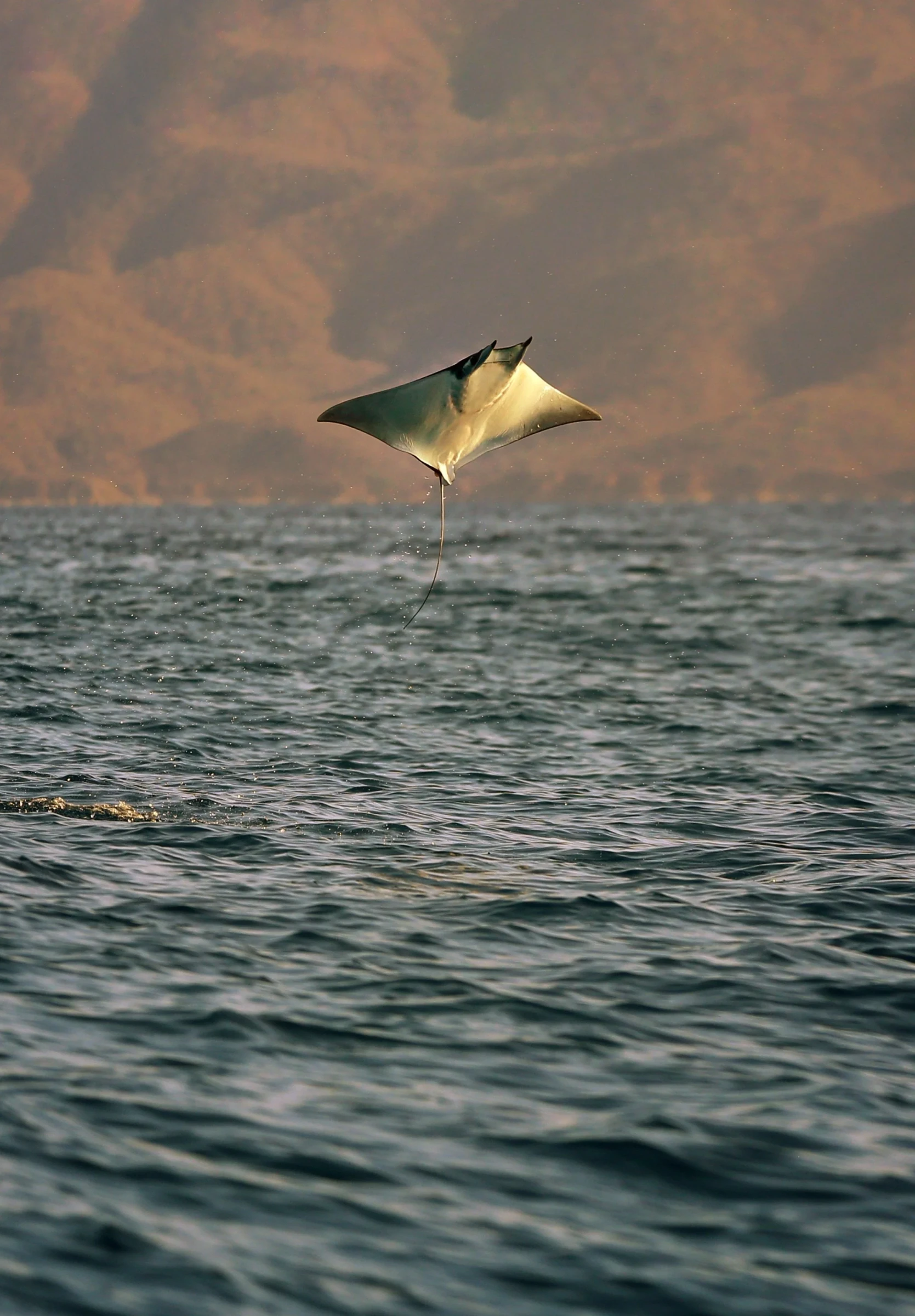
In terms of nature, Baja California Sur is one of the most generous places in Mexico. Forty minutes south of La Paz is La Ventana, where between May and July mobula rays gather by the thousands and launch themselves out of the water, and nobody can quite explain why. Off La Paz, Isla Espíritu Santo, a protected natural area, holds one of the most accessible sea lion colonies in the Sea of Cortez. On the Pacific side, Magdalena Bay opens out into mangroves, dunes and one season after another: the Marlin and Sardine Run in fall, the gray whale in winter, the humpback on its migratory passage.
None of that is visible from a lounge chair. Not because the resort hides it, but because nature doesn’t keep buffet hours: the mobula rays jump when they jump, the tide decides, and the privilege of seeing it means being out there, with someone who knows how to read the water.
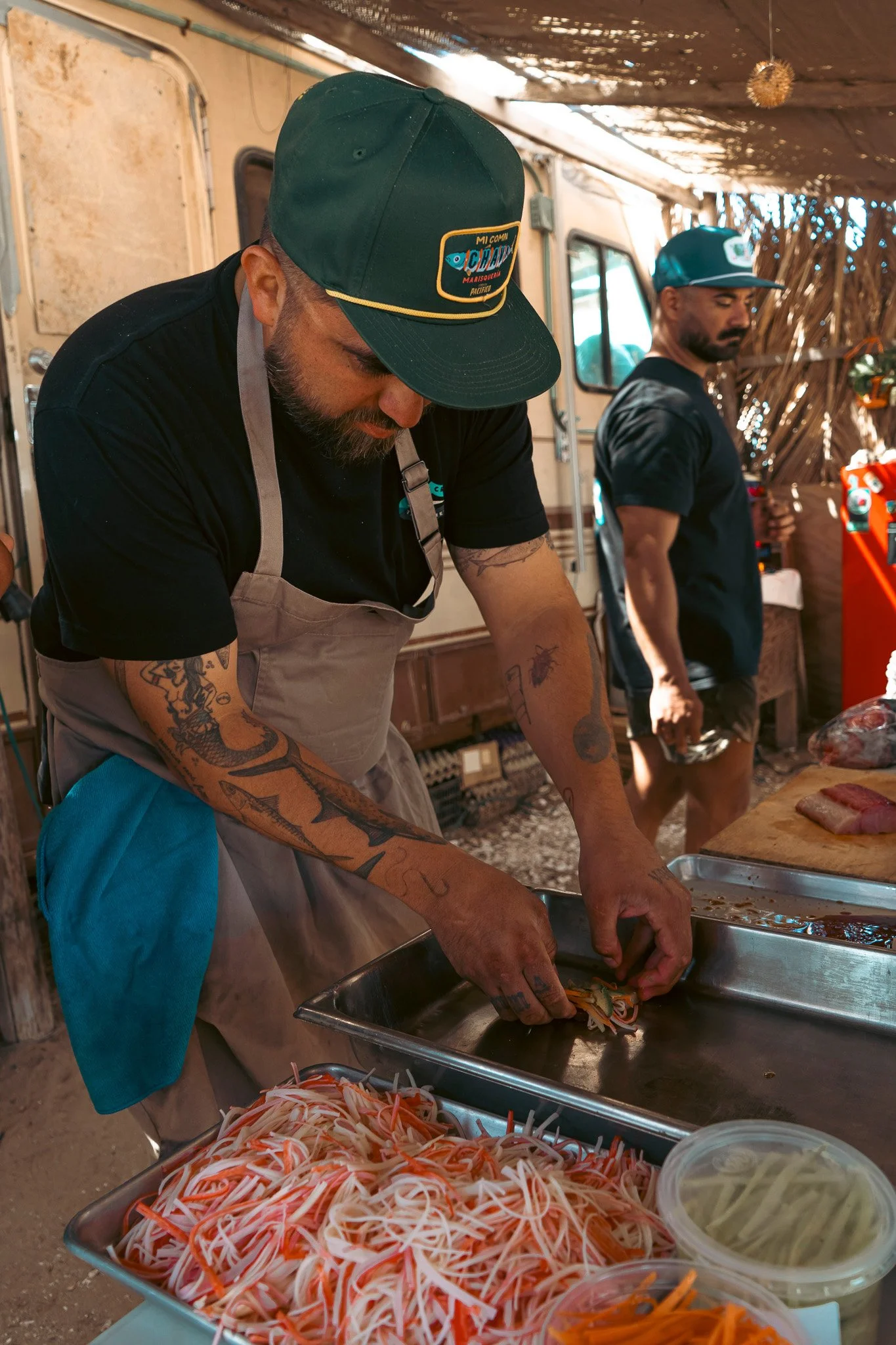
That’s the other loss, and maybe the more serious one: the people. In El Sargento, the town next door to La Ventana, the family behind Nativo Expediciones moved from small-scale fishing to running ecotourism in the Sea of Cortez. Going out on the water with them teaches you the place in a way no concierge can, and every expedition they run is an economic argument that a living sea is worth more than an exploited one. When the trip never leaves the walls, that story, and the dozens like it, loses both its audience and its income. ## Five principles for traveling differently in Baja You don’t have to give up comfort to step outside the resort model. You have to change the criteria you build the trip on. These are the five we use, both when we design our expeditions and when we travel on our own. ### 1. Let the season pick the destination, not the other way around All-inclusive sells availability: there’s always a room, there’s always sun. Nature sells moments: mobula rays from May to July, the Marlin and Sardine Run between September and November, the gray whale in winter, kitesurfing wind from November to March. The trip changes completely when the question stops being “when do I have time off?” and becomes “what’s happening at sea on those dates?” Our expedition calendar is built on exactly that logic. ### 2. Let your money touch the ground Choose local operators, cooks, guides and places to stay. Not as charity: because they’re better. The guide who grew up fishing that bay finds wildlife an outside guide never sees, and the income that reaches them creates the most powerful incentive for conservation there is: nature left standing being the best business in town.
3. Fewer properties, more depth
The classic resort itinerary piles up amenities; the trip you remember piles up hours on the water, in the desert and in conversation. Four days well spent in a single ecosystem are worth more than seven split between transfers. It’s why our expeditions run 4 days and 3 nights in one place: nature shows more to the people who stay put.
4. Comfort yes, walls no
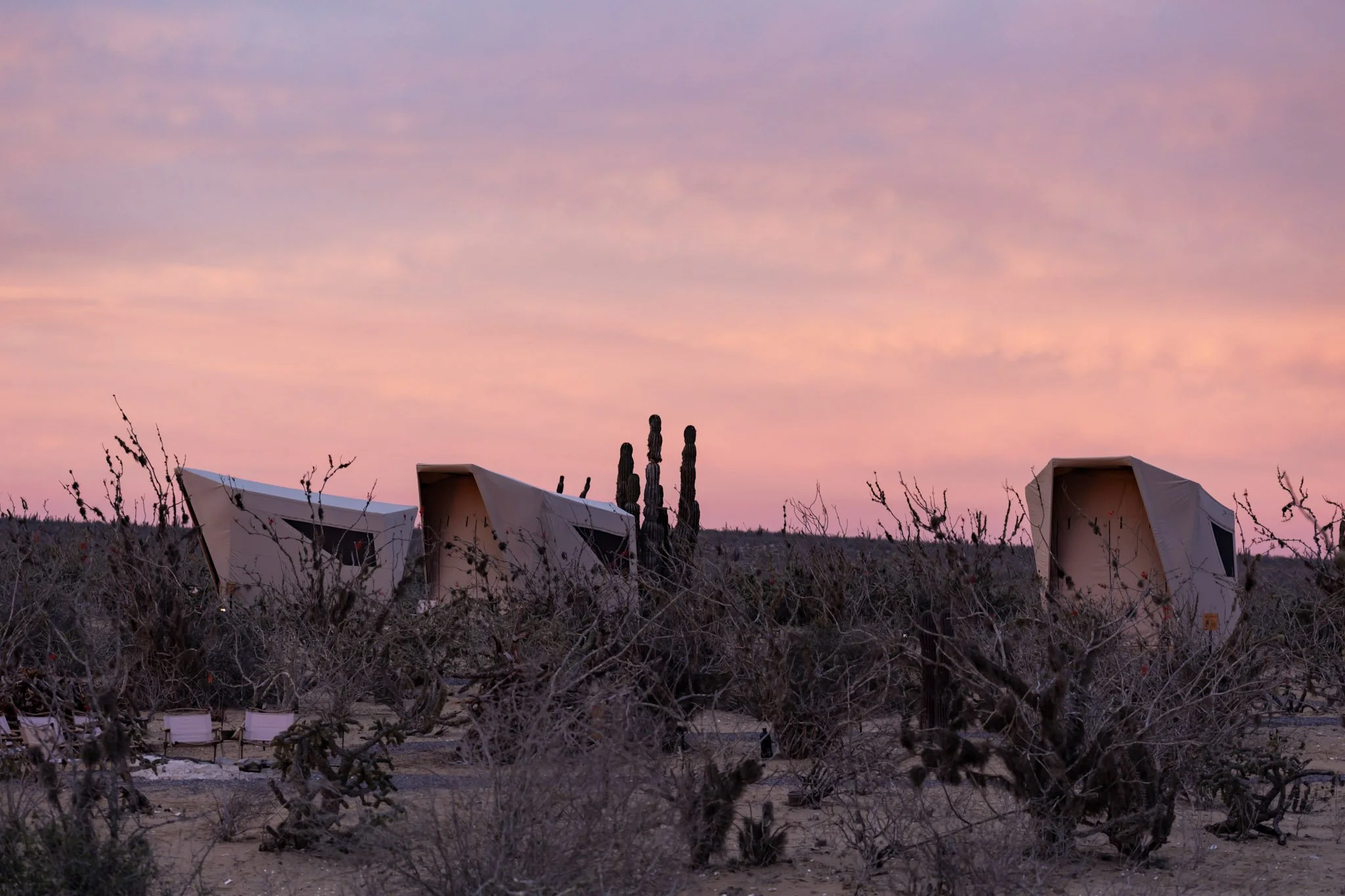
The false choice offered to the luxury traveler is “resort or sacrifice.” There’s a third way: light, reversible infrastructure that puts a real bed, a real kitchen and a hot shower in the middle of the landscape, with nothing poured, no fences, no privatized beach. We work on a put-it-up, take-it-down model: camps that go in and come out without altering the ground, with a deliberately low maximum capacity. Luxury, understood that way, isn’t excess. It’s access to the extraordinary with the comfort already solved.
5. Demand numbers, not adjectives
Any hotel can call itself sustainable. Ask how much of its spending stays in the community, how much water it uses, what it does with its waste, how many of its people are local. The ones who are serious keep count and share it; the ones who aren’t change the subject. We publish ours at /impacto.
Three ways to build the trip (no resort, no improvising)
We’re not proposing a closed itinerary, but three proven routes depending on what you’re after. All of them start in La Paz, whose airport takes direct flights from Mexico City and other cities in the country, or in Los Cabos, which has more international connections, plus a drive north.
The Sea of Cortez route (4 to 5 days). Base in La Paz or go straight to La Ventana. The malecón and La Paz cooking on arrival day, Isla Espíritu Santo and its sea lions, and the main event: going out on the water in La Ventana in mobula season. Our guide to what to do in La Ventana covers operators, tables and timing.
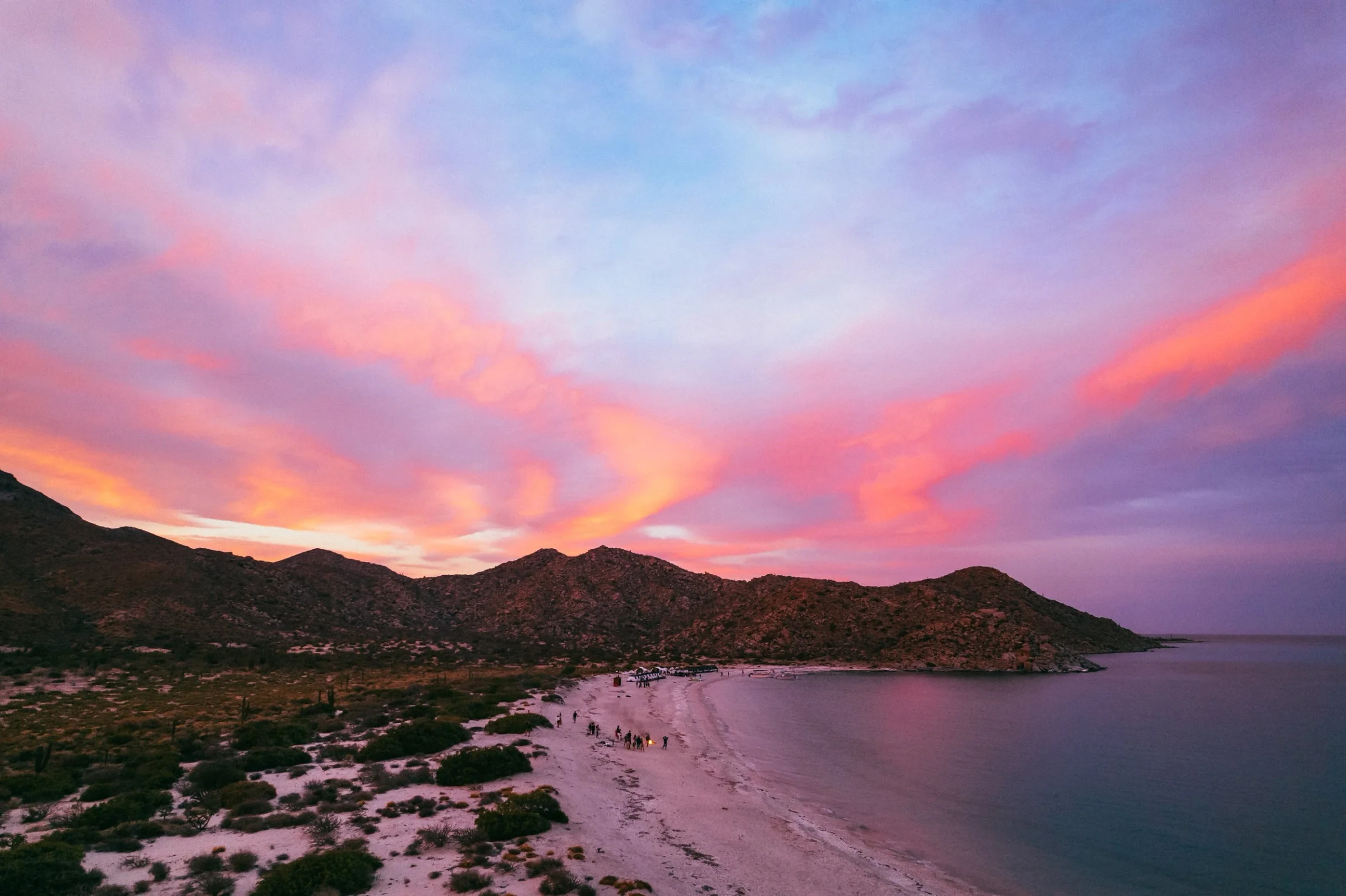
The wild Pacific route (4 days). Cross the peninsula to Magdalena Bay: mangroves by boat, the dunes of Isla Magdalena, an oyster farm, and whichever season you land in, from the Sardine Run to the gray whale. It’s the least photographed Baja and the most honest. We wrote about it in our Magdalena Bay guide.
The desert and art route (3 to 4 days). Todos Santos and its scene of galleries, cafés and market gardens between the desert and the sea, combined with Pacific beaches and, in the winter months, turtle hatchling releases. It works on its own or as a quiet finish to either of the other two.
All three fit inside the budget of a week at a high-end resort. The difference isn’t what it costs: it’s where the money ends up and what you take home in exchange.
How we curate it at Akampa
We’re not a travel agency: we’re a conservation initiative that sustains itself through tourism. We design 4-day, 3-night expeditions in La Ventana and Magdalena Bay with the whole logistics side handled (camp, kitchen, guides, safety, timing) precisely so you can do what a resort won’t let you do: be outside. Every expedition puts income directly into the communities where we operate, and the limited capacity isn’t marketing scarcity: it’s a conservation tool.
If this is the kind of trip you’re looking for, the best place to start is our calendar of upcoming expeditions, and if you want to understand where all of this comes from, our story is waiting for you.
Write to us on WhatsApp and we’ll put together the version of Baja you don’t see from the pool.
See you out there.