
Experiences
What to Pack for a Nature Trip in Baja California Sur: The Checklist That Helps You Avoid 80% of Mistakes
June 16, 2026
We’ve packed this suitcase hundreds of times. At Akampa, we set up camp in La Ventana season after season, so this list doesn’t come from a catalog—it comes from what we actually pack, what we use every day out in the field, and what, once again, someone wished they’d brought. Between the desert and the Sea of Cortez, between the midday heat and the chill that sets in as soon as the sun goes down, Baja California Sur puts to the test what you packed—and, above all, what you forgot. Most packing mistakes aren’t a huge deal, but they can become “little thorns in your side” that add up: the sunburn on the first day that ruins the next three, the early-morning chill you didn’t anticipate, or the wrong sunscreen.
This isn’t an endless “just in case” list. It’s the opposite: the essentials for a sea-and-desert ecosystem, organized according to the logic of how the place works, featuring the gear picks we actually take out into the field. We organize our expeditions in partnership with The North Face, so when we mention a piece of clothing or a bag, it’s because we’ve actually put it to the test.
The Logic of Layering: Why Baja Requires a Different Packing Approach
The fundamental mistake is packing for “a beach.” Baja California Sur isn’t just a beach: it’s a desert that opens up to one of the most biodiverse seas on the planet, with a temperature range that surprises almost everyone. You can go from the blazing midday sun—which is incredibly intense here—to the dry cool of the night in a matter of hours. That’s why you don’t pack by individual items—you pack by layers: one for the ocean, one for the desert sun, and one for the night. If you cover all three, you’ve got 90% of it figured out.
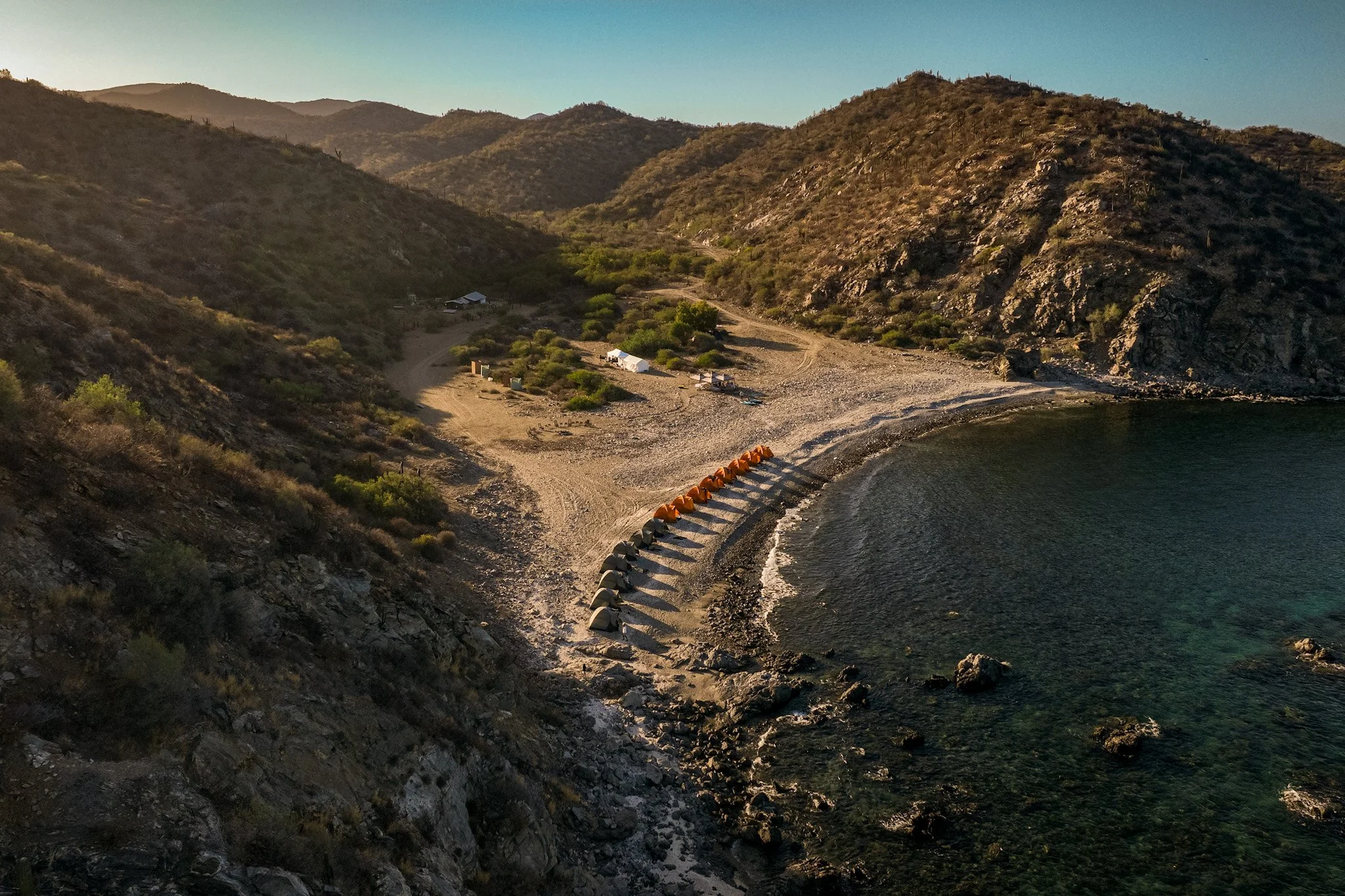
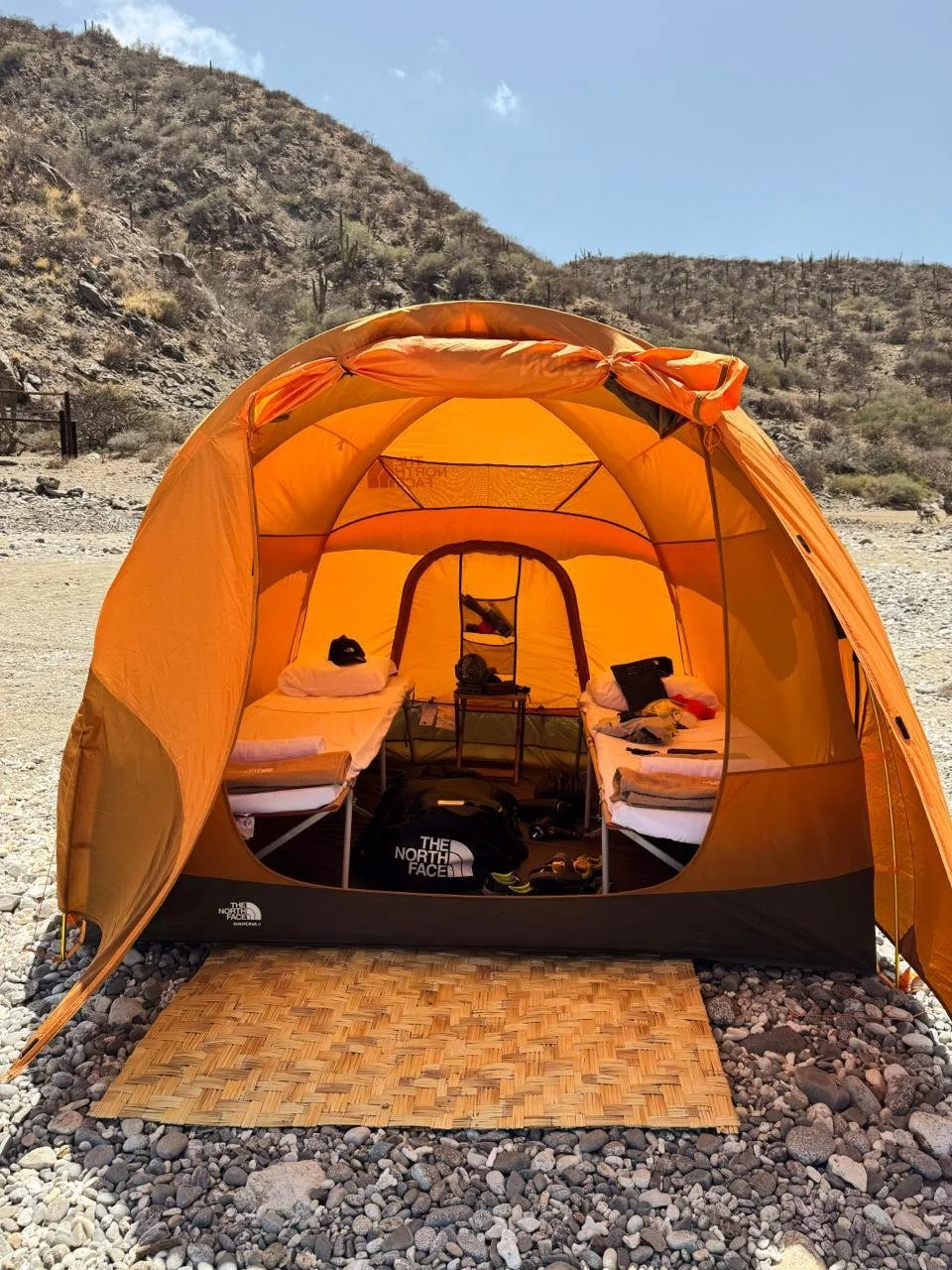
And here’s a space-saving tip: on an Akampa expedition, we set up camp ourselves (this year, with Wawona tents from The North Face—the same ones you saw in the photos from La Ventana), so you don’t have to carry a tent or camping gear. This list is what you bring; we’ll take care of the rest.
For the Sea
The Sea of Cortez is the reason for the trip, and almost everything that happens in the water involves snorkeling or freediving, not scuba diving. That determines what you pack.
- Long-sleeved rash guard. More than just a layer of warmth, it provides sun protection in the water, where sunburn is treacherous because you don’t feel it.
- Your own snorkel and mask, if you have them. Equipment is provided on most expeditions, but a mask that fits snugly against your face completely changes the experience.
- Water shoes. Entry points into the water in BCS are usually rocky or have pebbly beaches. Protecting your feet is the difference between enjoying your time in the water and limping around for the rest of the day.
- Quick-dry towel, which weighs and takes up a fraction of the space of a regular towel.
- Dry bag. The most underrated accessory: it keeps your phone, camera, and rain jacket dry during panga transfers. A 10- to 20-liter bag is sufficient.
> Akampa Tip: If your trip coincides with the mobula shark gathering (May–July), opt for a long-sleeved spandex top over a thick wetsuit: the water is warm, and you’ll be getting in and out of the water many times, but it also helps protect you from jellyfish. We cover this in detail in “Where to See Manta Rays (and Orcas) in Mexico.”
For the Desert and the Sun
Out of the water, the enemy is the same all day long: the sun. Covering up is more effective—and gentler on your body—than reapplying sunscreen every hour.
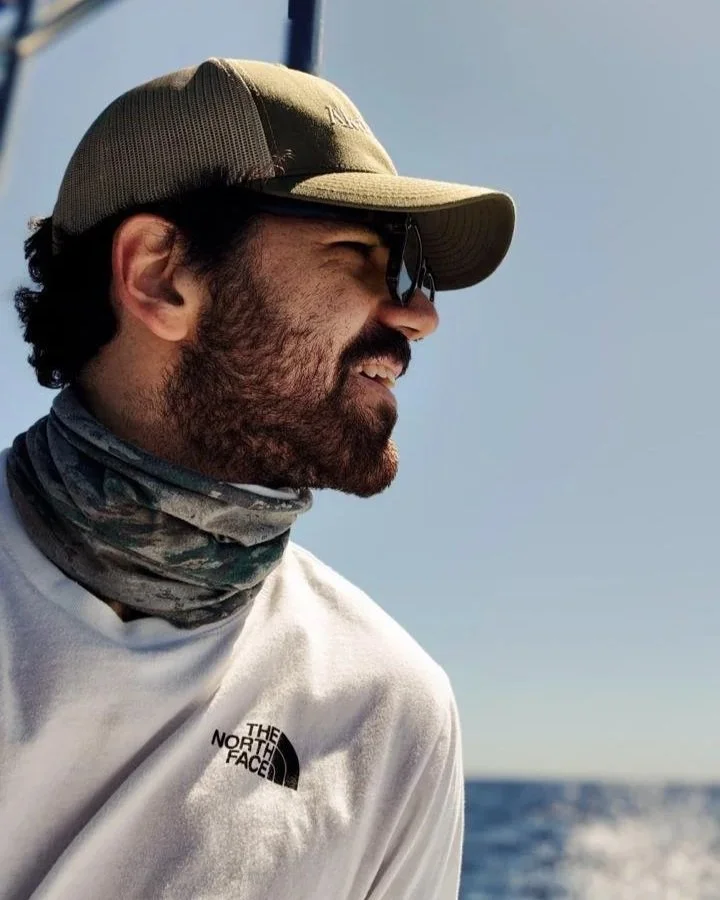
- A wide-brimmed hat or a cap with a neck flap. Your neck and ears are the first to suffer from the Baja sun. Our pick: The North Face Horizon Hat—ultra-lightweight, quick-drying, and with an adjustable closure; a light color reflects heat better.
- Lightweight, long-sleeved, quick-drying clothing in light colors. A technical long-sleeved shirt covers more skin and feels cooler than a cotton T-shirt soaked in sweat. It was, without exaggeration, the garment we wore most at camp.
- Sunglasses with real UV protection, ideally polarized: on the water, the glare tires your eyes within minutes.
- Lightweight pants or technical shorts that work equally well on land and for a short hike through the desert.
- Sturdy walking sandals; we recommend the Explore Camp Shandal sandals: the terrain consists of sand, rock, and, at times, mangroves.
For the Evening
Here’s the mistake people make most often: packing as if Baja were hot 24 hours a day. The desert cools down quickly as soon as the sun goes down, and at an oceanfront campsite, you’ll feel the evening breeze. A thermal layer is not optional.
- A warm jacket or fleece. It takes up little space and is what you’ll be most grateful for as evening falls. It’s worth investing in a quality mid-layer; The North Face’s line of fleeces and jackets is designed specifically for this.
- One more layer, like a sweatshirt or light thermal, for the early morning hours and early trips to the ocean, which start off cold before the sun warms things up.
- A hat and, if you feel the cold easily, a buff or neck warmer.
- Comfortable long pants for dinner under the stars.
> Akampa Tip: The most memorable trips out to sea start early, when the water is calm. That’s the coldest time of the day. That extra layer that seemed “unnecessary” when you were packing ends up being the star of the morning.
The Right Sunscreen: The Detail That Matters Most
If you change just one thing in your usual packing list, let it be this. Most conventional sunscreens contain oxybenzone and octinoxate, two chemical filters linked to coral bleaching and damage. In a sea as vibrant as the Sea of Cortez, every swim leaves a residue in the water you came to admire.
The good news is that there are sunscreens formulated not to harm the reef: mineral-based formulas containing zinc oxide or titanium dioxide, free of oxybenzone and octinoxate. They offer equal or better protection and don’t poison the ocean. Look for them based on these characteristics (there are more and more options available), and when combined with sun-protective clothing, you’ll reduce both sunburn and your environmental footprint.
This isn’t just a cosmetic detail, and it’s worth explaining why it matters so much to us. In El Sargento, the sister town of La Ventana, a family of fishermen who for generations made their living from the sea now runs an ecotourism business called Nativo Expediciones: they stopped fishing the reef so they could teach others about it. Their income depends on the reef staying alive, not on how much is taken from it. When you choose a sunscreen that doesn’t harm it, you’re not just following an abstract rule—you’re protecting the very thing that sustains the people who welcome you. Conservation, when viewed up close, almost always has a first and last name.
Hydration
The desert dehydrates you without warning, because the dry air evaporates your sweat before you even notice it.
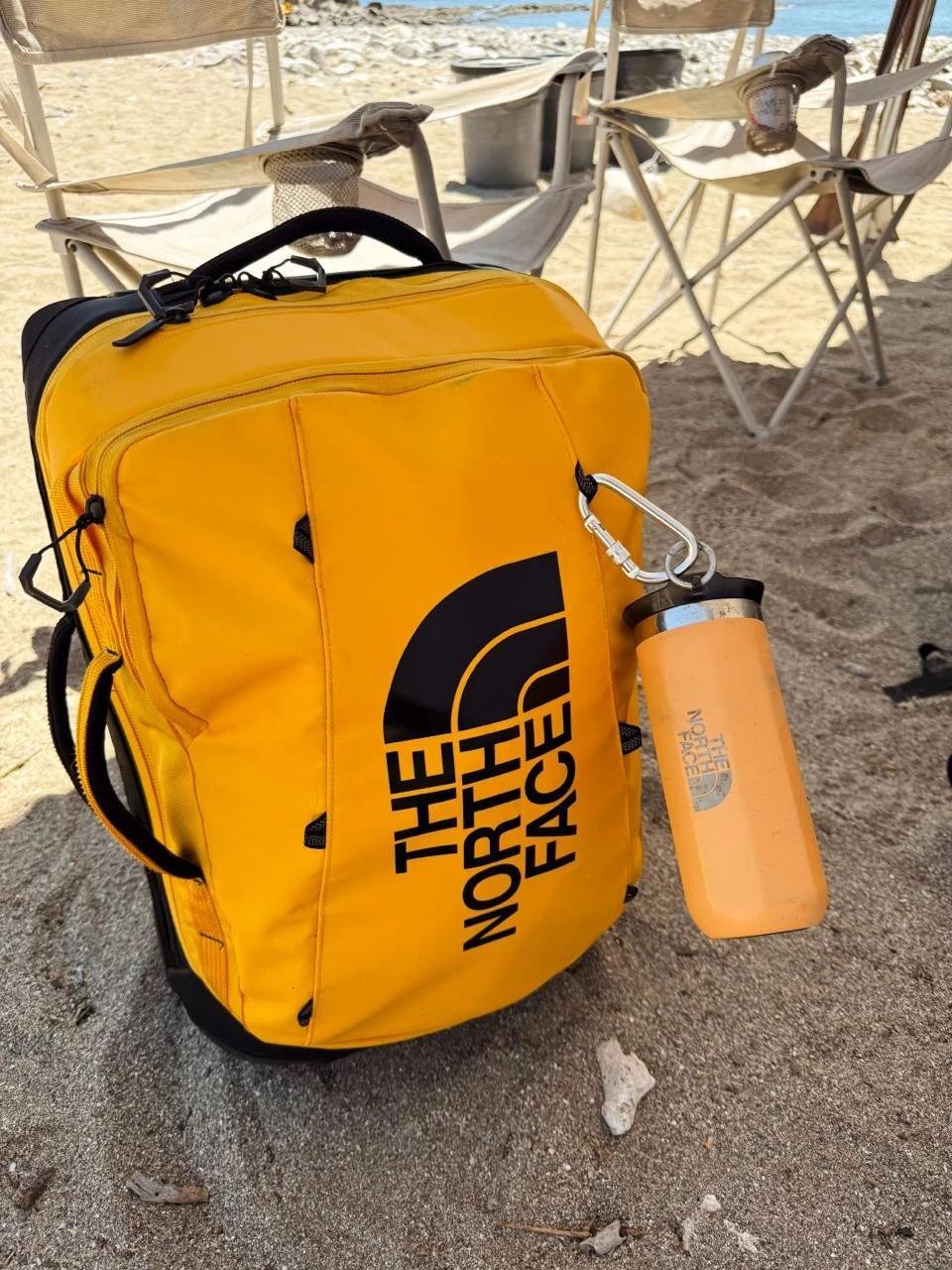
- A reusable water bottle holding at least one liter. Besides being a no-brainer, it helps avoid single-use plastic that ends up in the ecosystem. Serious camps offer refill stations; ours is no exception.
- Electrolyte packets. A full day of sun and salt calls for more than just water. They weigh next to nothing and prevent that afternoon slump.
Electronics
You’ll want to capture what you see, but the nature camp intentionally operates on limited power (part of having a low environmental impact is not overconsuming), so you’ll need to bring your own power source.
- A high-capacity power bank. This is the key item: at a low-energy campsite, don’t assume there will be an outlet available all night.
- A camera or GoPro with a waterproof case, and its charger.
- Cables, an extra memory card, and—if you’re shooting a lot—a second camera battery.
- Ziploc bags or pouches to protect your electronics from saltwater and sand—the two silent enemies of any device on the coast.
How to Pack It All (Without Fighting With Your Suitcase)
A rigid airport suitcase doesn’t work well for a camp you reach by boat. What works is flexible luggage that’s adaptable, withstands dust and salt, and is easy to carry over rocks or sand. Here’s what we use:
- A duffel bag as the main suitcase. The North Face Base Camp Duffel is our workhorse: practically indestructible, splash-proof, with an internal pouch for wet or dirty items. The M (71 L) is more than enough for four days; the L is sufficient if two people are sharing one.
- A carry-on for the cabin. The 42 L Base Camp Voyager Duffel qualifies as carry-on luggage and holds fragile items: camera, lenses, documents, and a change of clothes. It converts into a backpack when you need your hands free.
- A daypack. The Borealis Backpack is your companion for outings: water, sunscreen, a rain jacket, and a camera. Comfortable all day long and with space for a water bottle on the outside.
> Akampa Tip: Pack your duffel with “accessible layers” in mind. Put your beach gear on top, your nightwear within easy reach, and your land gear at the bottom. When you’re in a dinghy, you don’t want to have to open the whole bag just to grab a hat.
The Most Common Mistakes (and How to Avoid Them)
After many seasons, almost all the missteps can be boiled down to five:
1. Packing only for the heat. The nighttime chill catches 80% of travelers by surprise. A thermal layer is a must.
2. Bringing the wrong sunscreen. Conventional sunscreen damages the reef and often provides poorer protection. Switch to a mineral-based one before you leave.
3. Packing too much. Huge hard-shell suitcases for a campsite you reach by boat. A flexible duffel bag fits better and is easier to carry.
4. Underestimating the sun. Reapplying sunscreen is no substitute for covering up. A hat, sunglasses, and long sleeves do the heavy lifting.
5. Assuming there will be cell service and outlets. Download what you need and bring your own power source. Part of the trip is, after all, about disconnecting.
What You DON’T Need to Bring
It’s worth mentioning, because it lightens your load: leave your hair dryer, “dressy” clothes, dress shoes, and hard-shell city suitcase at home. Don’t bring a tent, sleeping bag, or camping gear either: on an Akampa expedition, all of that is already set up and taken care of at the campsite. A nature trip in Baja is all about two or three functional outfits that you wash and reuse. Here, the real style is traveling light.
> Akampa Tip: If you’re starting from scratch, the complete guide by ecosystem is in “Best Camping Gear for Mexico,” where we break down what to bring to the desert, jungle, ocean, and mountains with products from The North Face Mexico.
How We Do It at Akampa
Packing well for Baja California Sur is, at its core, an act of respect: toward your own comfort and toward the place you’ll be calling home for a few days. The thermal layer that saves you in the early morning, the sunscreen that doesn’t harm the reef, the water bottle that prevents one more piece of plastic: every decision you make about what to pack is also a decision about what kind of traveler you want to be.
On our expeditions, we take care of the details so you only have to carry the essentials: your comfort is taken care of, water refills are ready, beach gear is provided, and the camp—including Wawona tents—is set up and taken down without leaving a trace on the ground you walk on. You bring the layers; we bring the rest. Traveling prepared is also a way to conserve.
Check out the dates and availability for our upcoming expeditions to La Ventana and Bahía Magdalena, and write to us to receive the complete packing list before your trip.
See you out there.
Frequently Asked Questions
What clothes should I bring to Baja California Sur?
Pack in layers: lightweight, long-sleeved, quick-drying clothing for the desert sun; a wetsuit or UPF-rated spandex for the ocean; and a thermal layer (fleece or jacket) for the evenings, when it cools down quickly. Choose light colors and breathable fabrics—and avoid heavy cotton.
What kind of sunscreen can you use in the Sea of Cortez?
A mineral-based sunscreen containing zinc oxide or titanium dioxide and free of oxybenzone and octinoxate. Conventional chemical sunscreens are linked to coral damage, so it’s best to switch to a mineral-based option before traveling and supplement with sun-protective clothing.
Does it get cold at night in Baja California Sur?
Yes. Since it’s a desert climate, the temperature drops significantly as soon as the sun goes down, and you can feel the nighttime sea breeze. A warm layer is the most appreciated item—and the one most travelers forget.
What’s the best type of luggage for a nature trip in Baja?
Flexible and durable luggage, not a hard-shell suitcase: you’ll arrive at the campsite by panga and over sand or rocks. A Base Camp-style duffel as your main bag, a carry-on for fragile items in the cabin, and a daypack for outings will cover the entire trip.
Do I need to bring my own camping gear?
No. On an Akampa expedition, the camp is already set up—with a tent, bed, and amenities included—so you don’t have to carry a tent, sleeping bag, or camping gear. You just bring layered clothing, sunscreen, and your electronics; we’ll take care of the rest.